Quick View
Loading...

Kalpa Pharmaceuticals
Estimated Delivery: 12-26 Days (International), 3-6 Days (United States)
Return within 45 Days of purchase. Duties & taxes are non-refundable.
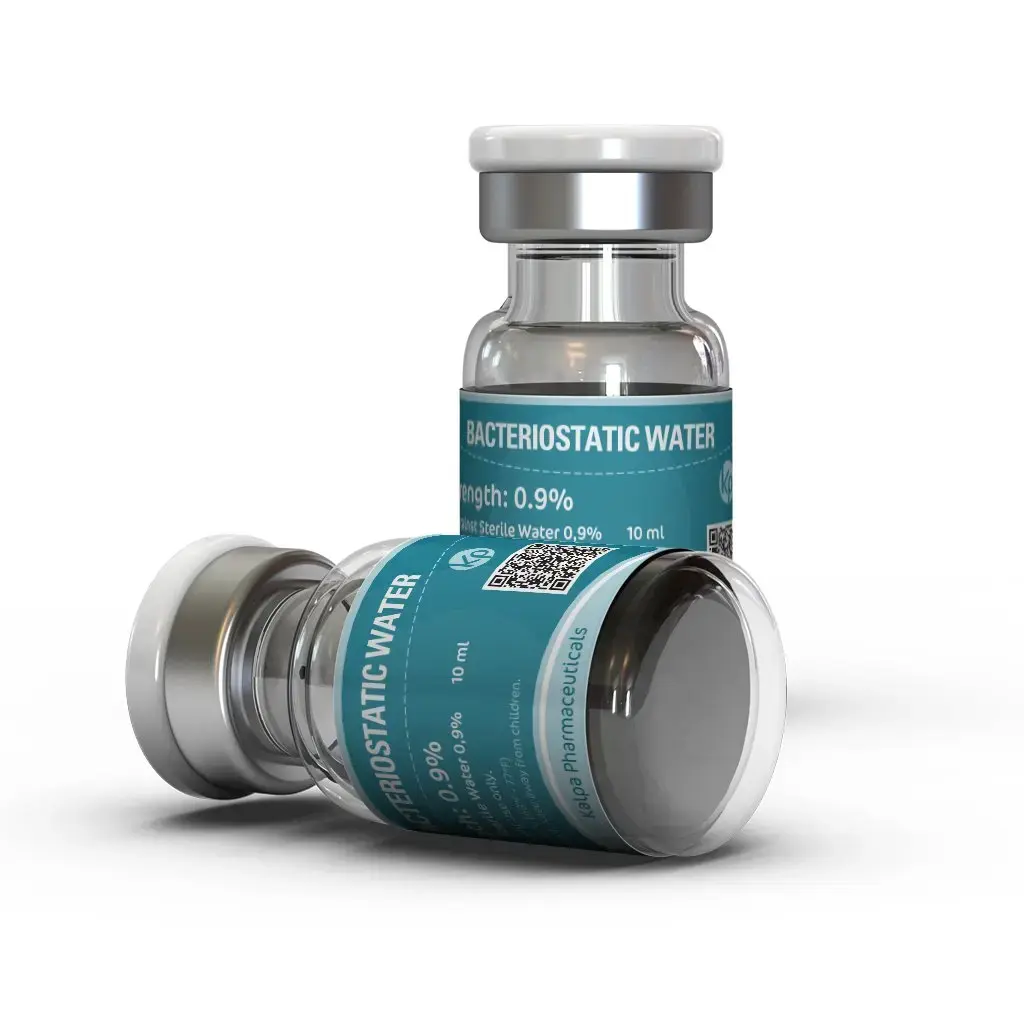
Buy Bacteriostatic Water by Kalpa Pharmaceuticals at XSteroids. This is the diluent that every lyophilised peptide on the shelf needs before a syringe can be used: sterile water for injection carrying 0.9 percent benzyl alcohol as a preservative, in a multi-dose vial. Below is what the label actually says, why the preservative changes the handling rules, how the milligram and unit arithmetic works once the powder is mixed, how the 28 day window is counted, and where this vial belongs in a peptide order.
This page is about the diluent, not about any one peptide. The label wording is narrow, the warnings are specific, and the practical rules about the multi-dose container come from sterility guidance rather than from a marketing sheet. Nothing here is a treatment plan.
The product is sterile, non-pyrogenic water for injection with benzyl alcohol at 0.9 percent, which is 9 mg per ml. The alcohol is the bacteriostatic part of the name: it does not sterilise the vial, but it slows the growth of bacteria that a needle might carry in, which is what makes a multi-dose container practical to draw from more than once. The label describes a pH of about 5.7 with a range of 4.5 to 7.0.
One glass vial per pack. The catalog record for this card does not print a fill volume, so nothing on this page claims a number of millilitres that the record does not show. What the label does state is the intended use, and it is narrow: this water is for dissolving or diluting drugs that will be given intravenously, intramuscularly or subcutaneously, following the instructions for the drug itself. It is not a drink, not a fluid replacement and not a general-purpose solvent.
Lyophilised peptides and growth hormone kits ship as a dry cake in a sealed vial. The dry form is stable for a long time, but it cannot be measured with a syringe, so water has to go in first. Adding a known volume to a known mass of powder turns an unmeasurable solid into a liquid with a stated concentration, and concentration is the only thing a barrel can read.
Benzyl alcohol does the second job. In a single-use container, the contents must be used at once because any contamination introduced by a needle stays in the vial and grows. With a preservative present, repeated entries are tolerated under aseptic technique, which is exactly what a peptide routine needs when doses are drawn several times from the same vial. That is also why sterile water for injection without the preservative is a single-use item: there is nothing in it to hold bacteria back.
The arithmetic is simple and worth writing on the label. Divide the mass of powder in the vial by the millilitres of water added, and the result is the concentration. A 5 mg peptide vial plus 2 ml gives 2.5 mg per ml, so every 0.1 ml carries 250 mcg. The same 5 mg vial with 1 ml gives 5 mg per ml, so 0.1 ml carries 500 mcg. More water means a weaker solution and a larger draw for the same mass.
On a U-100 insulin barrel the whole scale is standardised: 1 ml equals 100 units and 1 unit equals 0.01 ml, so 10 units on the barrel is 0.1 ml every time. The mixed vial then goes into the refrigerator at 2 to 8 C and is used within the 28 to 30 day window that peptide practice applies to a reconstituted solution. Cloudy liquid, floating particles or a damaged seal mean the vial is discarded rather than argued with.
Sterile water for injection is the unpreserved version and is meant for a single use, which suits a one-off dose and not a working vial. Sodium chloride 0.9 percent is the other common diluent and is preferred when a label specifies it, because some compounds are sensitive to the absence of salt. Bacteriostatic water wins when a peptide vial has to be entered repeatedly over days, which is the usual pattern on this shelf.
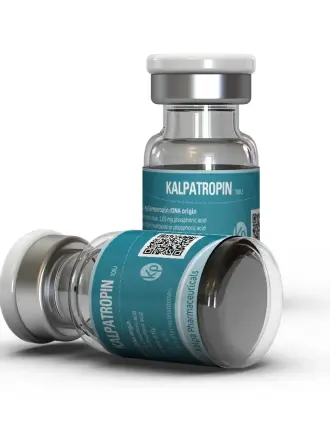
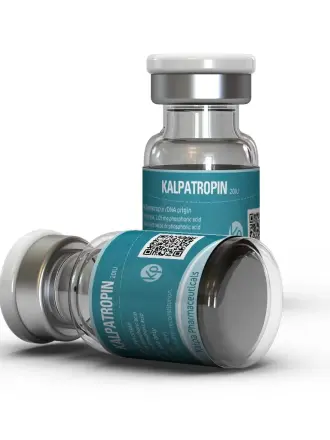
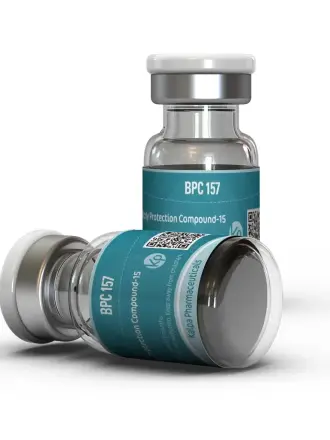
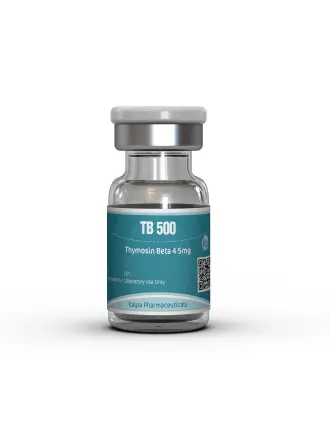
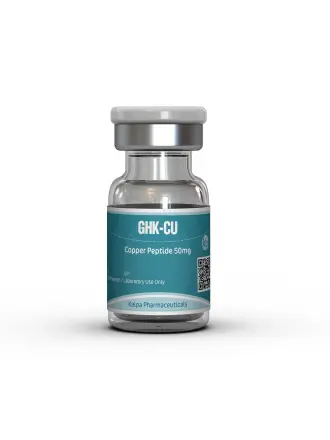
The vial on this card is the supply item that supports the rest of the line: Kalpatropin somatropin 100 and 200 IU is a kit that needs water before use, and the lyophilised repair and growth peptides such as BPC 157 2 mg, TB 500 5 mg and GHK-CU 50 mg all arrive dry.
There is no dose of diluent, only a volume, and the volume is chosen to make later draws convenient. A small draw is easier to read accurately, so less water gives a smaller number of units for the same mass; a larger volume spreads the same mass over more units and is easier to fine-tune. Either way, the mass in the syringe is fixed by the ratio, not by how full the vial looks.
Practical rules that keep the maths honest: write the concentration and the mixing date on the vial immediately, use the same barrel type every time so units mean the same thing, and never add water from one vial into another vial. If a label states a specific diluent, follow that label, because it is the only instruction written for that product.
Water is the one item that touches every reconstituted card in the brand, so it makes sense to buy it in the same order as the peptide it will mix. A single multi-dose vial covers many mixing sessions, which is why one vial per order is normally enough for a short peptide block.
Typical companions on this shelf are the growth peptides, the repair peptides and the secretagogues: Ipamorelin 5 mg, Sermorelin 5 mg, Tesamorelin 5 mg and MOTS-c 10 mg are all supplied as dry powder, so the water card is the natural first item in the cart rather than an afterthought.
Water does not belong to a cycle phase, a stack or a post-cycle plan, and it has no effect on hormone recovery. What it does change is hygiene: a preserved multi-dose vial that is handled cleanly will serve a whole block, while a vial left open, stored warm or wiped with a used swab is the most likely source of a sore injection site in any peptide routine.
Because the diluent carries no active compound, it cannot be stacked in the pharmacological sense. The only scheduling question is expiry after the first puncture, and the default answer from sterility guidance is 28 days in the refrigerator, after which the vial is replaced even if liquid remains.
The label is explicit about who must not receive it. It is not for newborns, because benzyl alcohol is toxic in that group, and it is not for epidural or spinal anaesthesia. It is not for fluid replacement, and an intravenous line without a dissolved drug can cause haemolysis, which is the breakdown of red blood cells. Before an intravenous infusion the solution has to be brought to roughly isotonic.
Injection site reactions are the realistic risk for anyone using any injection water: pain, a febrile reaction, abscess, tissue necrosis, infection, thrombosis, phlebitis or leakage into surrounding tissue. Aseptic technique, a fresh swab and a discard of any cloudy vial are the controls. This page is not medical advice, and anyone with a diagnosed condition should be working from a prescription rather than a supply card.
Store the sealed vial at room temperature away from direct light, with the cap and stopper intact. Unopened vials keep for two to three years under those conditions. Once the stopper has been punctured, move the vial to the refrigerator at 2 to 8 C, do not freeze it, and use the contents within 28 days, which is the default that sterility guidance applies to multi-dose containers.
Do not store a mixed peptide solution longer than the peptide label allows, do not return a drawn syringe to the vial, and never combine leftover water from two vials. If the liquid turns cloudy, shows particles or the seal is broken, discard the vial. Keep the vial out of reach of children and out of a bathroom cabinet, where heat and damp shorten its useful life.
The vial comes from the Kalpa Pharmaceuticals brand catalog at XSteroids, which keeps the diluent, the growth kits and the peptides on one shelf so a single order can be mixed the day it lands. The checkout is encrypted and shipping is discreet; US parcels arrive in about 3 to 6 days and international ones in 12 to 26 days. Peptide vials most often bought with this water are listed below.
It is sterile water for injection with benzyl alcohol added at 0.9 percent, which is 9 mg per ml. The alcohol is a preservative, so a multi-dose vial can be entered more than once under aseptic technique. The label lists a pH of about 5.7 and describes the product only as a diluent for injectable drugs.
Because it decides how long the mixed vial is usable. An unpreserved container is a single-use item, since anything a needle carries in will multiply. With benzyl alcohol present, repeated draws are tolerated, and the working window most peptide practice applies after mixing is 28 to 30 days in the refrigerator at 2 to 8 C.
Divide the powder mass by the volume of water. A 5 mg vial with 2 ml gives 2.5 mg per ml, so 0.1 ml holds 250 mcg. The same vial with 1 ml gives 5 mg per ml and 500 mcg per 0.1 ml. Write the result on the vial before it goes cold.
Ten units. A U-100 barrel is standardised so that 1 ml equals 100 units and one unit equals 0.01 ml. That means 0.1 ml reads as 10 units, 0.2 ml as 20 units and 0.5 ml as 50 units, whatever is dissolved in the liquid. The mass behind those units depends entirely on the concentration.
No. Sterile water for injection has no preservative, so it is intended for a single use and must be discarded afterwards. Bacteriostatic water carries 0.9 percent benzyl alcohol, which allows a multi-dose container. Choosing between them comes down to whether one dose or a repeated working vial is being prepared.
The label warns against it. Intravenous use without a dissolved drug can cause haemolysis, and the product is not intended for fluid replacement. It is also not for newborns, because benzyl alcohol is toxic in that group, and not for epidural or spinal anaesthesia. Its only stated role is diluting an injectable drug.
You can buy bacteriostatic water by Kalpa Pharmaceuticals online at XSteroids, direct from the brand catalog. Add the vial on this page to the cart and check out securely. US domestic shipping takes 3 to 6 days and international delivery usually takes 12 to 26 days.
Loading...
Your cart is currently empty. Let us assist you in finding the right product