Quick View
Loading...

Kalpa Pharmaceuticals
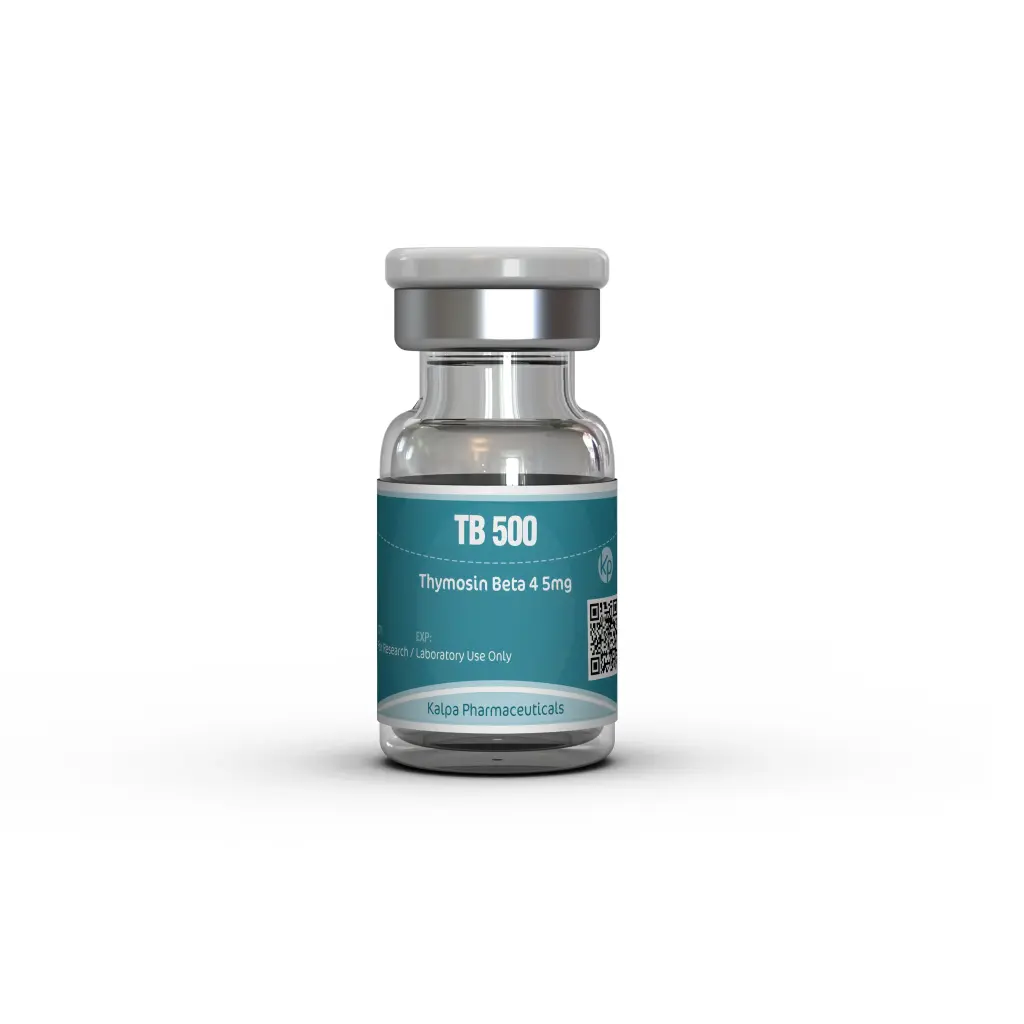
Buy TB 500 5 mg by Kalpa Pharmaceuticals at XSteroids. This thymosin beta-4 fragment arrives from Kalpa as one glass vial of lyophilised powder for laboratory use. Below is the chemistry, the actin-binding mechanism, the gap between animal findings and human reality, the mixing arithmetic and the anti-doping position, together with a plain account of what you are buying.
The status belongs first: TB 500 is a research product sold for laboratory work, and there is no licensed medicine form of it. No human study of this fragment exists, and whatever clinical evidence there is describes the parent protein rather than this fragment. None of it forms a dosing schedule or medical guidance.
Chemically the peptide is Ac-LKKTETQ, an N-acetylated chain of seven residues that mirrors positions 17 to 23 of thymosin beta-4. Its registry markers are CAS 885340-08-9 and PubChem 62707662, with the molecular formula C38H68N10O14. The full protein runs to 43 residues and roughly 4921 g/mol, coded by the gene TMSB4X.
The pack is one sealed vial of white powder at the 5 mg strength, with bacteriostatic water listed separately. Kalpa prints the mass on the label; no filler list and no batch potency certificate appear here, so the contents rest on the manufacturer. Every number quoted below comes from the label or the published literature, never from guesswork about the glass.
The active region is the short LKKTET sequence. It binds G-actin, the unpolymerised form of the protein, and by doing so shapes how actin filaments assemble, how cells move and how they migrate. Actin remodelling underlies wound closure and tissue rebuilding, which is why the literature ties the peptide to those processes instead of to a cell-surface receptor.
Extracellular effects of the parent protein appear to travel by routes that never touch actin, so the published picture is not tidy. Vendor pages add actin binding, new blood vessel growth, lower pro-inflammatory cytokines, more collagen and keratinocyte migration to the list; those are marketing statements rather than clinical findings and should be read that way.
The human evidence is absent. TB 500 has not been studied in people, and the one clinical setting where the parent protein was tried uses eye drops, a different route and a different molecule. Preclinical work reports quicker tissue repair and anti-inflammatory shifts, but that is animal and cell-culture data which cannot yield a human effect size.
One claim deserves a direct correction. Several sellers describe TB 500 as a seventeen amino acid fragment, while the chemical record describes a seven-residue acetylated peptide. Both versions circulate, and the honest position is that the scientific characterisation is the shorter one. Buyers comparing labels will meet this contradiction, so it is worth naming plainly.
Fix the water volume first and the rest follows. Every millilitre added to the 5 mg fill cuts the strength per millilitre: one millilitre gives 5000 mcg in each millilitre, two millilitres halve it to 2500 mcg, and five millilitres bring it to 1000 mcg per millilitre. A U-100 barrel marks hundredths of a millilitre, so ten marks always stand for 0.1 ml, which then carries 500 mcg, 250 mcg or 100 mcg depending on the dilution chosen.
Let the water run down the inner wall instead of onto the powder, swirl rather than shake, and label the vial with its strength per millilitre and the day it was mixed. Those two details keep later draws consistent. A 5 mg fill is small, which suits one mixing session better than repeated ones.
TB 500 is almost always discussed beside a second repair agent, and the frequent partner is the BPC 157 pentadecapeptide. BPC 157 2 mg is examined for local tissue and gut effects, while TB 500 is read as systemic and actin-binding, so the two approach repair from different sides on paper. Neither is a medicine.
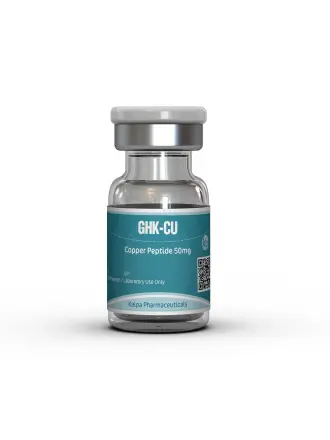
The third member of this shelf is the copper peptide GHK-CU 50 mg, studied mainly for skin and connective tissue. All three arrive dry and draw from one shared water line, bacteriostatic water.
The growth-hormone row is a different shelf rather than a partner for this vial. It holds the ghrelin-receptor secretagogue Ipamorelin 5 mg and the GHRH peptide Sermorelin 5 mg, both of which work by prompting the pituitary rather than by touching actin. Sharing a bench and a diluent does not make them interchangeable with TB 500, so a study that puts the two groups side by side is running two separate experiments.
A repair peptide works on tissue pathways rather than the androgen axis, so it causes none of the shutdown that a post-cycle plan exists to undo. Nothing needs restarting when a study ends. What matters is local instead: the state of the injection site, swelling that will not settle, and whether an injury is being allowed to heal.
Where such a vial is studied beside an anabolic course, the recovery plan stays with the anabolic compound. Kalpa keeps that shelf apart, and a peptide block leaves it untouched. The prescription route on that line is Kalpatropin, which supplies growth hormone rather than prompting the body to make it. Because TB 500 has no licensed medicine form, there is no label instruction on duration or stopping rules, and the honest position is that the researcher defines the block rather than a guideline.
No human safety profile exists, because the human dataset is empty. Animal work flags no organ toxicity at the amounts used, but the absence of an animal signal is not a safety finding in people. As a laboratory-grade item it stands outside pharmaceutical manufacturing controls, so purity and exact mass come down to the supplier.
In sport the verdict is unambiguous. WADA lists thymosin beta-4 and its derivatives, with TB 500 named as the example, inside class S2, and the prohibition is permanent. There is no in-competition window and no therapeutic-use route for this substance.
Keep the sealed lyophilisate between 2 and 8 C in the refrigerator and out of the light. Dry powder also tolerates short spells at a controlled 15 to 25 C, but it must not be frozen, since ice crystals harm the peptide backbone. Cool and dark, the dry vial keeps for a long time.
After mixing, hold the solution at 2 to 8 C and finish it inside a 28 to 30 day window, the life peptide practice allows a reconstituted vial. Throw away any solution that has been frozen and thawed, or that has clouded or carries floating specks. Keep it away from children.
This 5 mg vial sits in the Kalpa Pharmaceuticals catalog at XSteroids beside the partner peptides and the diluent they need, so a bench can be equipped in one order. The checkout is encrypted; domestic US parcels usually arrive inside 3 to 6 days and international orders in 12 to 26 days. The vials usually mixed in the same session as this one are linked below.
TB 500 is the N-acetylated heptapeptide Ac-LKKTETQ, which corresponds to residues 17 to 23 of the full protein thymosin beta-4. The parent protein is a 43 amino acid molecule; the vial contains only the short fragment, not the whole protein.
LKKTET is the short sequence inside TB 500 that binds G-actin. By attaching to unpolymerised actin it influences filament assembly, cell movement and migration, which is the basis for linking the peptide to tissue repair research. It does not act through a cell-surface receptor.
No. TB 500 has never been tested in humans, and no human half-life or dose is established. The only clinical work belongs to the parent protein thymosin beta-4, and it used eye drops, a different route and a different molecule. Any human figure quoted for TB 500 is extrapolation.
It depends on the water added. With 2 ml the concentration is 2.5 mg per ml, so 0.1 ml holds 250 mcg. With 1 ml it is 5 mg per ml and 500 mcg per 0.1 ml. On a U-100 barrel every 0.1 ml reads as 10 units.
Subcutaneous dosing is what the vendor literature describes, and the peptide is presented as systemic, meaning the needle does not have to land in the injured tissue. Because no human protocol exists, the placement and frequency are research choices rather than label instructions.
Thymosin beta-4 and its derivatives are prohibited under class S2, and TB 500 is named as the example. The ban applies at all times, in and out of competition, with no therapeutic-use exemption route. An athlete using it would be in violation permanently.
You can buy TB 500 5 mg by Kalpa Pharmaceuticals online at XSteroids, straight from the brand catalog. Add this vial to the cart and complete the encrypted checkout. US orders typically land in 3 to 6 days, while international delivery takes 12 to 26 days.
Loading...
Your cart is currently empty. Let us assist you in finding the right product