Quick View
Loading...

Kalpa Pharmaceuticals
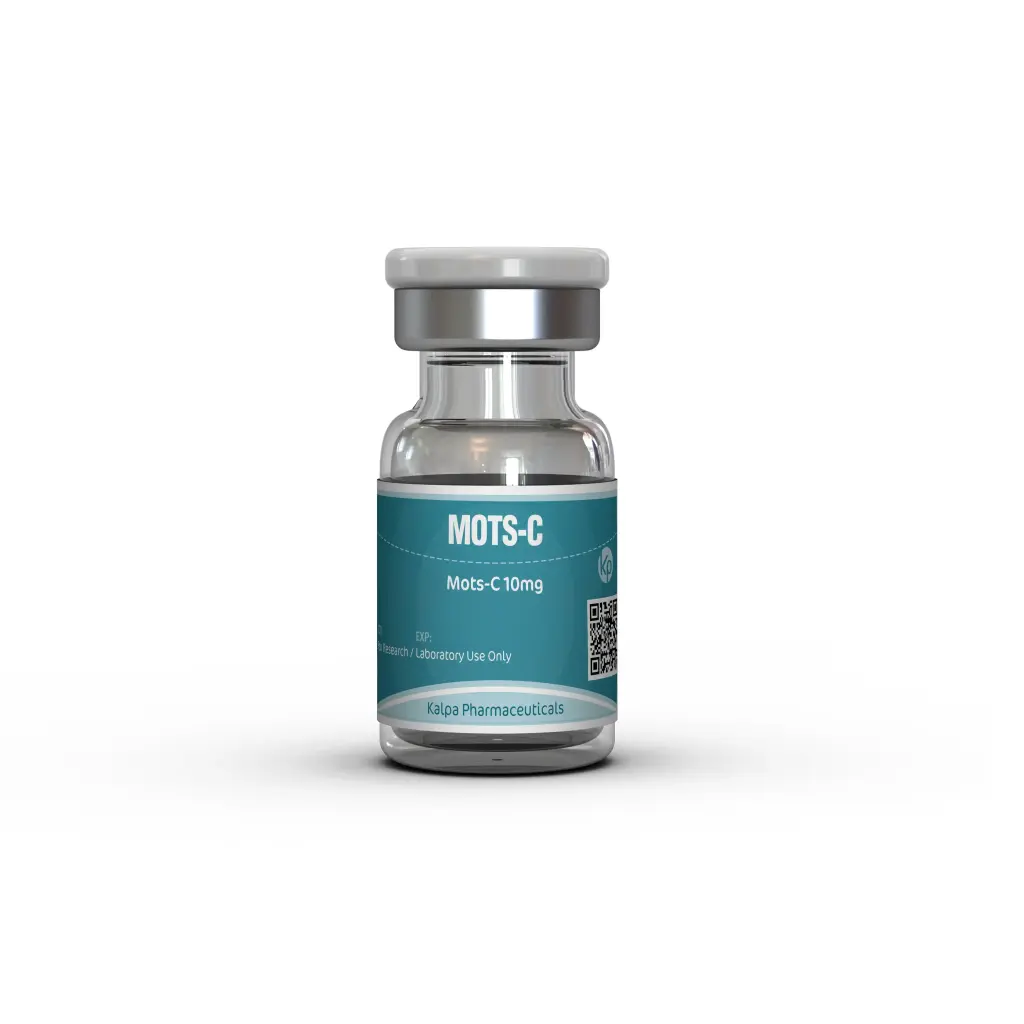
Buy MOTS-c 10 mg by Kalpa Pharmaceuticals at XSteroids. The product is a single lyophilised vial holding 10 mg of a short peptide whose code sits inside a mitochondrial gene rather than a nuclear one, a detail that explains why it draws research attention at all. Below are the sequence and its origin, the metabolic pathway it is believed to touch, how far the evidence actually reaches, the dilution arithmetic for a 10 mg vial, stacking logic, and the anti-doping and storage position.
The honest framing comes first. MOTS-c has no licensed medicine form, completed human trials of the peptide itself do not exist, and what is sold here is a laboratory material rather than a medicine. Mouse results are striking, human observations are indirect, and nothing on this page is a dosing recommendation or medical advice.
The name is an abbreviation of mitochondrial open reading frame of the 12S rRNA-c. Chemically it is a chain of sixteen amino acids, written MRWQEMGYIFYPRKLR, encoded by the mitochondrial gene MT-RNR1 and described in 2015 by Changhan Lee working in the Pinchas Cohen laboratory. Its known binding partner is casein kinase 2, and that interaction is the basis of most of the proposed biology [1].
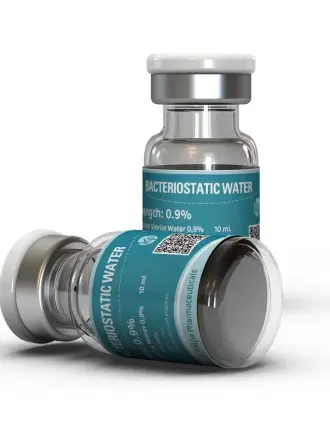
What the box delivers is one glass vial of white powder and nothing more. No diluent is supplied, so a bacteriostatic solution must be bought separately, and the bacteriostatic water in the same range is the usual choice. There is no published assay of the contents of this exact vial and no printed excipient list, so the 10 mg figure repeated here is the label value and not a verified measurement.
MOTS-c is classed as a mitochondrial derived peptide, one of a small group of signalling molecules the mitochondrion makes and exports. Its described role is in skeletal muscle glucose handling: cells release more of it under physical effort, and it is thought to switch on AMP-activated protein kinase, the enzyme that senses low cellular energy and shifts metabolism toward oxidation. Because of that pattern it is often labelled an exercise mimetic in review writing [2][4].
In mice the picture is unusually tidy for a research peptide. Delivered MOTS-c has been linked to better physical performance, lower fat mass, reduced insulin resistance and even a longer healthy lifespan in older animals, an effect traced back to metabolic homeostasis rather than to any anabolic action [2]. It carries no steroid skeleton, does not act at the androgen receptor and has no relationship to the muscle-building compounds on the same shelf.
Expect far less than the mouse column suggests. No completed clinical study of MOTS-c administration in people exists; the human literature is observational, linking plasma MOTS-c levels to metabolic measures rather than testing what happens when it is given. A 2023 review states plainly that no effective method for using MOTS-c in the clinic has been developed [3][4].
One trial is running. NCT07505745 is a phase 2a study in adults with prediabetes and excess weight, randomised, double blind and placebo controlled, enrolling 120 participants on a fixed once-daily subcutaneous amount for twelve weeks, with the change in the Matsuda insulin sensitivity index after an oral glucose tolerance test as the primary endpoint. That design tells you where the field actually stands, and it is nowhere near a routine protocol [5].
Everything follows one division: milligrams of peptide divided by millilitres of water. One millilitre into a 10 mg vial gives 10 mg per ml, so 0.1 ml holds 1 mg. Two millilitres gives 5 mg per ml and 0.5 mg per 0.1 ml, while five millilitres gives 2 mg per ml and 0.2 mg per 0.1 ml. Every 0.1 ml reads as ten units on an insulin-type U-100 barrel, no matter which volume was used.
Run the water down the vial wall and swirl the powder into solution instead of shaking, since foam can degrade a peptide. A mixed vial keeps about 28 to 30 days at 2 to 8 C; the powder lasts far longer and should not be frozen. At 1 mg a day a 10 mg vial supplies ten research draws and at 0.5 mg twenty, but there is no established human amount to anchor any of it [6].
There is no established stacking protocol, and it is worth saying so plainly. Discussion usually keeps MOTS-c alone or beside other metabolism-focused research, because its proposed target is cellular energy handling rather than any hormonal axis. Within the Kalpa shelf the neighbours are growth-axis and repair peptides, so any pairing is a matter of a shared research bench rather than overlapping pharmacology.
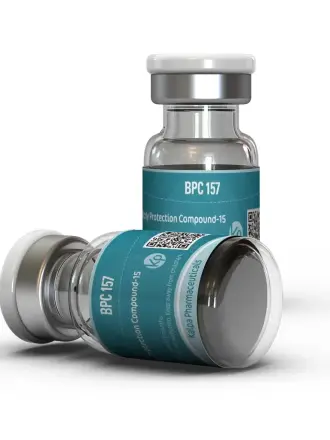
The Tesamorelin 5 mg vial sits on the metabolic side of the range and is the closest thematic relative, while the repair peptides BPC 157 and TB 500 belong to an entirely different line of research. None of that constitutes a combination recommendation, and no human study has examined any of these pairings together.
MOTS-c has no effect on the gonadal axis, so it does not shut down natural testosterone and a SERM-based recovery has no place here. The recovery question is instead about the peptide itself: with no published human half-life, there is no way to state how long it lingers, and a break between research blocks is a matter of caution rather than pharmacology.
What has been reported after online use, and never in a controlled setting, includes a faster pulse, insomnia and injection-site irritation, which is the sort of signal that argues for monitoring rather than for extended exposure [8]. Since none of this comes from clinical data, treat the reported pattern as unverified and keep any bench work conservative and short.
No clinical safety database exists, so side effects are known only from self-reported buyer experience: raised heart rate, irritation at the injection site, disturbed sleep, fever and local or general immune reactions all appear in that informal record [8]. None of it has been measured against a placebo, which means the list is a starting point for caution and not a validated profile.
Regulatory position is settled. MOTS-c is named on the WADA Prohibited List in class S4.4, metabolic modulators, with a permanent prohibition that applies in and out of competition. The human data on it remain early, and most of what is known comes from laboratory and animal work [6][7]. Supplied for research only; nothing here is medical advice.
Hold the dry powder cold at 2 to 8 C, sealed against moisture and away from light, and never put a lyophilised vial in the freezer. Once water has been added, keep the solution between 2 and 8 C and finish it within roughly 28 to 30 days, and do not refreeze a thawed vial. Check the lot number and expiry date before the first draw and discard any vial showing cloudiness or particles.
The 10 mg vial belongs to the Kalpa Pharmaceuticals brand range carried on this site, where the diluent and the other research peptides needed at the bench sit on nearby pages, so one order can cover a whole session. Checkout is encrypted; US parcels typically land in three to six days and international ones in twelve to twenty-six. The linked cards below gather the vials most often handled alongside this one.
It stands for mitochondrial open reading frame of the 12S rRNA-c. The peptide is sixteen amino acids long, written MRWQEMGYIFYPRKLR, and its code sits in the mitochondrial gene MT-RNR1. It was described in 2015 by Changhan Lee in Pinchas Cohen's laboratory, and its known binding partner is casein kinase 2.
The supporting work is almost entirely in mice, where delivered MOTS-c is linked to better fitness, less fat mass, lower insulin resistance and longer healthy lifespan. Human work is observational, tying plasma levels to metabolic readings, and no completed trial has given the peptide to people. A 2023 review states no clinical method has been developed.
NCT07505745, sponsored by Hudson Biotech, enrols 120 adults with prediabetes and excess weight, randomised, double blind and placebo controlled, on a fixed once-daily subcutaneous amount for twelve weeks. The primary endpoint is the change in the Matsuda insulin sensitivity index after an oral glucose tolerance test at twelve weeks. It began in February 2026.
Concentration equals milligrams divided by millilitres of water. One millilitre gives 10 mg per ml, two millilitres 5 mg per ml and five millilitres 2 mg per ml. On a U-100 barrel every 0.1 ml reads as ten units. There is no established human amount, so any figure used is a research value taken from study designs.
Class S4.4 covers metabolic modulators, and the 2026 Prohibited List names MOTS-c directly in the entry about AMP-activated protein kinase activation. The prohibition is permanent, applies in and out of competition, and an exemption is nearly unobtainable because there is no licensed therapeutic use for the peptide. Injectable peptides are covered the same way as oral forms.
Only informal reports exist, and they mention a faster pulse, injection-site irritation, insomnia, fever and local or general immune reactions. None of this has been compared with a placebo, so it should be read as a caution list rather than a validated safety profile. The FDA compounding briefing in 2026 cited a lack of clinical data on both safety and efficacy.
You can buy MOTS-c 10 mg by Kalpa Pharmaceuticals online at XSteroids, direct from the brand catalogue. Add the vial on this page to the cart and check out securely. US domestic shipping takes 3 to 6 days and international delivery usually takes 12 to 26 days.
Loading...
Your cart is currently empty. Let us assist you in finding the right product