Quick View
Loading...

Kalpa Pharmaceuticals
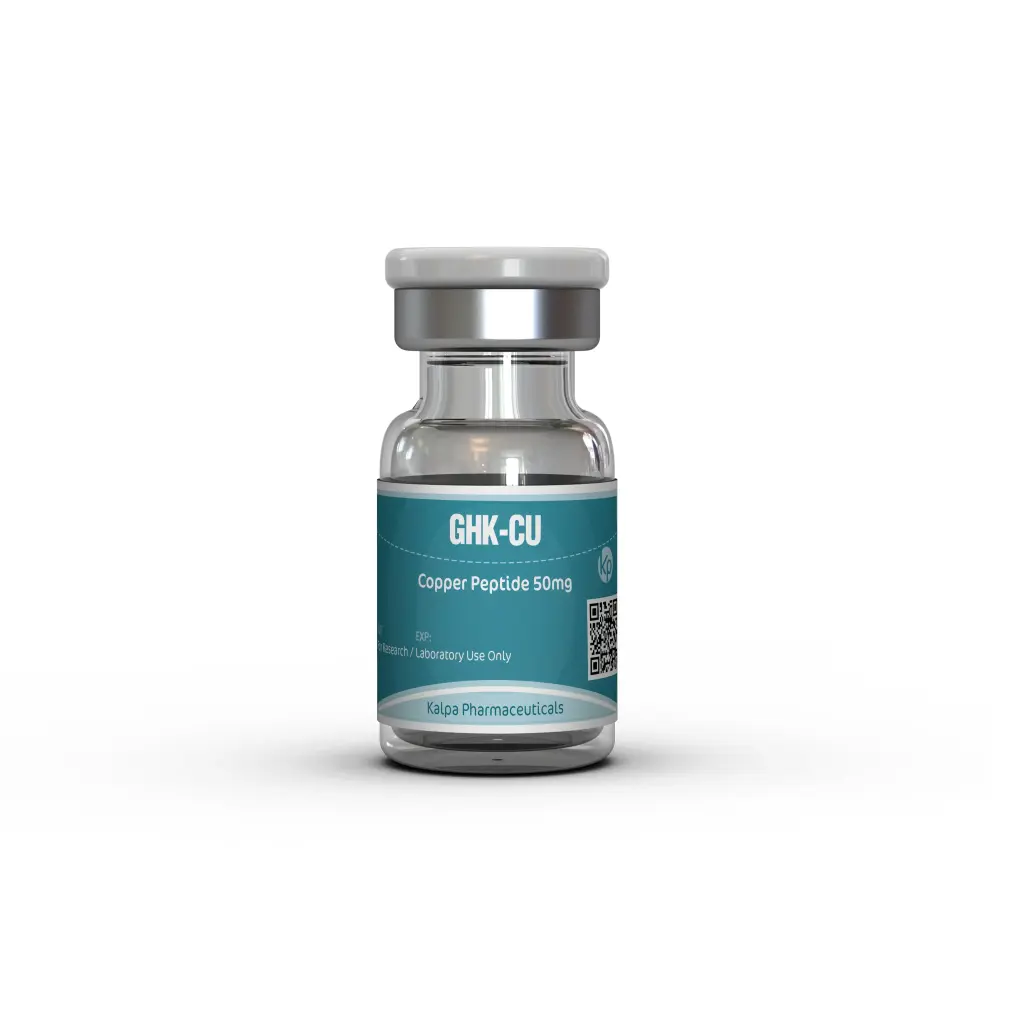
Buy GHK-CU 50 mg by Kalpa Pharmaceuticals at XSteroids. Kalpa supplies the copper tripeptide as one vial of lyophilised powder for bench use. The page explains the molecule, why a mixed vial turns blue, the pathways the research literature maps to it, how far the human data reach, the arithmetic of the fill, and its position on regulation and sport, alongside a clear note of what you are buying.
Status first: GHK-CU is a research product for laboratory work, and there is no licensed medicine form of it. Nearly all human exposure has been skin application rather than injection, so the injected record is thin. No part of this page is a dose recommendation or medical guidance.
The molecule is a naturally occurring copper complex of the tripeptide glycyl-L-histidyl-L-lysine, written Gly-His-Lys, joined one-to-one with copper(II). It was first isolated from human plasma and also occurs in saliva and urine. Its identifiers are the formula C14H21CuN6O4, a mass of 400.90 g/mol and PubChem CID 139035031. Cosmetics list the same molecule as copper tripeptide-1.
You receive one sealed glass vial of white powder at the 50 mg fill, with bacteriostatic water bought separately. Kalpa prints the mass on the vial, and no filler list or batch potency test is published here. Everything quoted below is label arithmetic or the published record.
The peptide was found in plasma by Loren Pickart in 1973, and by 1977 the growth-modulating sequence was identified as Gly-His-Lys, with the suggestion that it helps regulate how copper enters cells. Human plasma levels run near 200 ng per ml at age twenty and drop to roughly 80 ng per ml at sixty, so the compound is a normal plasma constituent rather than a foreign drug.
The research literature attributes a wide span of activity to it: faster wound closure, attraction of immune cells, antioxidant and anti-inflammatory action, stimulation of collagen and glycosaminoglycan synthesis in skin fibroblasts, new blood vessel growth and modulation of many genes. In cell and animal work it increased collagen production at picomolar and nanomolar concentrations, raised BDNF, VEGF and BMP-2 release, and sped healing in rabbit wounds. One caution from the source: GHK-CU drives both matrix metalloproteinases and their inhibitors, so it shapes breakdown as well as build-up of the dermis.
Human evidence is limited and mostly topical. In a 2018 study, GHK-CU applied to thigh skin for twelve weeks improved collagen output in about seventy percent of women, and a 2015 review recorded faster healing and wound contraction. Those are skin-application results; there is no established human half-life, and subcutaneous human data are essentially absent.
On regulation, GHK-CU has no licensed medicine form and is used as a cosmetic ingredient, while injectable copper peptides have moved ahead of the evidence. On anti-doping, the honest wording is narrow: GHK-CU does not appear on the 2026 WADA Prohibited List and no official ban could be found. That is an absence of data about a ban, which is not the same as a statement that the substance is permitted.
Because the vial holds 50 mg, the volumes are larger and the maths runs in milligrams. Two millilitres give 25 mg per ml, five millilitres 10 mg per ml, and ten millilitres 5 mg per ml. On a U-100 insulin barrel each 0.1 ml reads as ten units, and that same 0.1 ml carries 2.5 mg, 1 mg or 0.5 mg as the dilution changes.
Run the water down the inside of the vial rather than onto the powder, swirl softly, and never shake. Mark the vial with its milligrams per ml and the mixing date before it goes into the cold, since that note alone keeps later draws consistent.
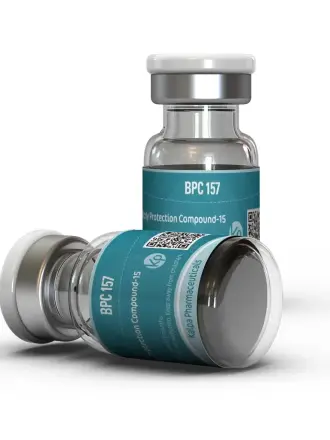
GHK-CU is routinely discussed in the same breath as the BPC 157 pentadecapeptide and the thymosin fragment. BPC 157 2 mg is studied for tissue and gut effects, while TB 500 5 mg is framed as a systemic actin-binding peptide; the copper tripeptide covers skin and connective tissue in this set. None of the three is a medicine.
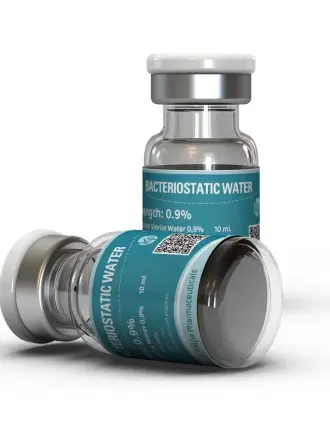
All of them arrive dry and are rebuilt with the same diluent, bacteriostatic water, so the water card is worth ordering alongside any of them.
One more vial often lands in the same order without belonging to the repair group: Ipamorelin 5 mg, a secretagogue that acts at the ghrelin receptor. It shares the diluent and the cold shelf but none of the targets described above, so it is a separate study rather than a stacking partner for the copper peptide.
GHK-CU does not touch the androgen axis, so it does not suppress natural production and does not create a shutdown that needs reversing. A post-cycle route is therefore irrelevant to it. The only monitoring worth doing is local: the state of the injection site and whether the tissue being studied is actually improving.
If the vial is used alongside an anabolic course, the recovery plan still belongs to that course, and Kalpa keeps it on a separate shelf, which runs from Nolvaxyl 20 mg to Clomixyl 50 mg. With no licensed medicine form there is no label guidance on duration, so the researcher decides where a block ends.
There is no formal human safety profile, and the injected route has far less exposure data than the topical one. Being a research peptide, it falls outside pharmaceutical quality control, so purity and exact mass are the supplier's responsibility. Any solution that turns cloudy or shows particles should be discarded rather than injected.
Regulatory status is straightforward: it is a cosmetic ingredient with no licensed medicine form, and it sits outside the dietary-supplement framework. Anti-doping status is best stated as no known official prohibition on the 2026 list rather than as a clearance.
Before it is mixed, the sealed powder can sit at controlled room temperature near 15 to 25 C or be refrigerated at 2 to 8 C, kept clear of light and damp. Freezing the dry powder is what damages the peptide, so avoid it. Cold and dark, the vial holds for a long time.
Once rebuilt, the solution stays at 2 to 8 C and is used within 30 days, the window peptide practice gives a reconstituted vial. Never refreeze the solution and do not run it through freeze and thaw cycles; a vial that clouds or shows particles should be thrown out. Store it well away from children.
Inside the Kalpa Pharmaceuticals brand page at XSteroids the 50 mg vial sits beside the other repair peptides and the water they require, so a full bench order can be placed at once. Checkout is secure, US delivery lands in 3 to 6 days, and overseas parcels take 12 to 26 days. The cards that most often ship with it are linked below.
It is a copper complex of the tripeptide Gly-His-Lys, bound one-to-one to copper(II), with formula C14H21CuN6O4 and a mass of 400.90 g/mol. It is a normal constituent of human plasma and is known in cosmetics as copper tripeptide-1.
The copper(II) ion bound inside the peptide. The same metal centre that makes the complex active gives a freshly reconstituted solution its characteristic blue tint, so colour is expected and is not a sign of degradation unless the liquid also turns cloudy or shows particles.
No. It is used as a cosmetic ingredient rather than a medicine, and there is no licensed medicine form of the injected product. Injectable copper peptides in particular are ahead of the clinical evidence, so the vial sold here is a research material.
It depends on the water volume. With 5 ml the concentration is 10 mg per ml, so 0.1 ml holds 1 mg. With 2 ml it is 25 mg per ml and 2.5 mg per 0.1 ml. On a U-100 barrel each 0.1 ml reads as 10 units.
Most laboratory work uses tiny concentrations, in the picomolar to nanomolar range, and the human studies applied the peptide to skin rather than injecting it. Vendor descriptions mention milligram amounts for systemic use in research models, but that is not a clinical dose and no labelled figure exists.
GHK-CU does not appear on the 2026 WADA Prohibited List, and no official prohibition could be found. That is an absence of data about a ban, not a statement that the substance is permitted, so athletes should treat it as unresolved rather than cleared.
You can buy GHK-CU 50 mg by Kalpa Pharmaceuticals online at XSteroids in the brand catalog. Put the vial on this page into the cart and finish the secure checkout. US shipping usually takes 3 to 6 days, and international delivery runs 12 to 26 days.
Loading...
Your cart is currently empty. Let us assist you in finding the right product