Quick View
Loading...

Zyvex Pharmaceuticals
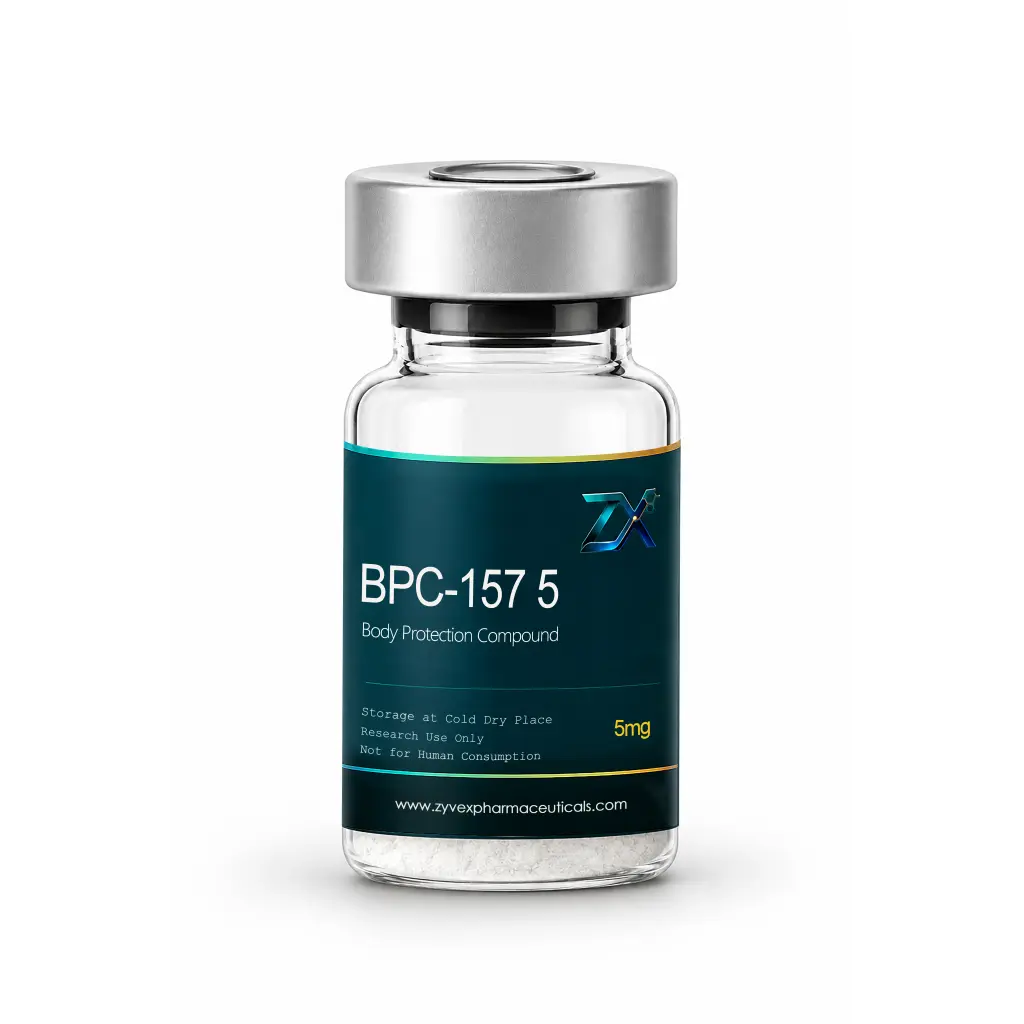
Buy BPC 157 by Zyvex at XSteroids. Zyvex ships this pentadecapeptide as one lyophilised vial intended for laboratory work. The page explains the molecule, the pathways the animal models credit it with, how thin the human data is, how the vial is reconstituted and read on a U-100 barrel, and where the legal and anti-doping lines fall.
The status comes first. BPC 157 is a research compound with no licensed medicine form, no international nonproprietary name and no label dose, and it is supplied here as a research product. Nothing on this page is a human protocol or medical advice.
BPC 157 is a fifteen amino acid peptide whose one-letter sequence is GEPPPGKPADDAGLV, its formula C62H98N16O22 and its mass about 1419.556 g/mol. It is a fragment of a larger protein extracted from human gastric juice, which is where the older labels come from: body protection compound 157, gastric pentadecapeptide, bepecin and PL 14736.
Each pack holds a single glass vial of white lyophilised powder that requires bacteriostatic water before a syringe can measure it, and that water is bought separately. This listing prints no fill strength, so the page does not invent one; the arithmetic below shows how to turn whatever mass sits on your label into units. No filler breakdown exists and no independent potency test of the batch has been published.
Its activity is broad rather than aimed at a single target. In cell and animal work BPC 157 lifts the expression of growth factor receptors, the growth hormone receptor among them, and it engages signalling pathways tied to cell growth and the formation of blood vessels while reducing pro-inflammatory cytokines. That is why studies cover many tissues rather than one organ.
All of the kinetics come from animals. In rats the intact peptide shows a half-life of about 7.9 to 30 minutes once it is given intravenously or intramuscularly, the kinetics stay linear, and the route out of the body runs through urine and bile. Absolute bioavailability after an intramuscular dose was calculated at roughly 14 to 19 percent for rats and 45 to 51 percent for dogs, while the molecule is cleaved into shorter fragments and free amino acids. Relative to its class it holds up well, and human gastric juice left it intact beyond 24 hours.
A systematic review spanning 1993 to 2024 screened 544 publications and ended up including 36 studies, of which 35 were preclinical and just one was clinical. The animal evidence reports faster healing of tissue and organs, cytoprotective and neuroprotective shifts and anti-inflammatory changes. A single clinical study is not a human evidence base.
The evidence is insufficient for a medicines licence, and no medicines licence has ever been issued for it, a point a 2025 review ties to the scarcity of trials. Claims of rapid human healing are therefore promotional rather than established. Sport takes the opposite line and closes the matter: WADA placed BPC-157 in class S0, its catch-all category, in 2022, and the 2026 list still names it, prohibited at all times.
Concentration equals mass divided by water volume, while the barrel only ever shows volume. Put 5 mg in the vial with 2 ml of water and the solution is 2.5 mg per ml, so 0.1 ml delivers 250 mcg. Put 10 mg with 2 ml and it becomes 5 mg per ml, so 0.1 ml delivers 500 mcg. Halve the water and the concentration doubles; double the water and each draw carries half as much.
A U-100 insulin barrel follows a fixed scale: 1 ml equals 100 units and 1 unit is 0.01 ml, so 10 units are always 0.1 ml. Write the mixed concentration and the mixing date onto the vial before it goes cold. Swab the stopper, run the water down the inside wall instead of onto the cake, and roll the vial rather than shaking it.
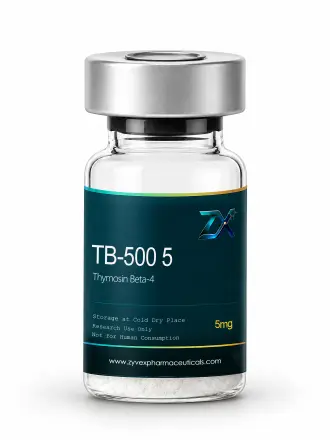
The partner that appears most in research write-ups is the thymosin beta-4 fragment. TB-500 is characterised as a systemic actin-binding agent, whereas BPC 157 is investigated for local tissue and gut effects, so they are discussed as complementary rather than duplicated. Neither is sold as a medicine.
GHK-CU 50, the copper tripeptide, completes the repair trio on this shelf, and its study focus is mainly skin and connective tissue. Peptides from the metabolic side of the catalog, such as Semaglutide 10 and Retatrutide 20, answer a completely different research question and do not belong on a repair bench.
BPC 157 has no action on the testosterone axis, so it causes no shutdown and no post-cycle protocol is required. Nothing needs restarting. The monitoring that counts is local and practical: the condition of the injection site, unexpected swelling, and whether the tissue under study is genuinely being rested.
Where a repair vial sits beside an anabolic compound, recovery planning is the business of that compound. Because the peptide has no licence or label, guidance on duration, stopping or blood work does not exist, and a study block is set by the researcher rather than by a rulebook.
No human safety profile exists, since the clinical dataset is almost empty. Animal studies report no organ toxicity at the amounts tested, but that is not a safety finding for people. A research vial also falls outside pharmaceutical quality control, which means purity and exact mass rest entirely on the supplier.
The legal position turns on local rules for research chemicals, because the peptide is neither a licensed medicine nor a dietary ingredient. Anti-doping is unambiguous: class S0 of the WADA Prohibited List, named as an example, prohibited at all times, with no in-competition window at all.
Keep the sealed vial at 2 to 8 C and away from light. The powder must never be frozen, because ice formation damages the peptide structure. Dry vials may instead be held at a controlled room temperature between 15 and 25 C for shorter periods, where they stay stable for a long time.
Once mixed, hold the solution at 2 to 8 C and finish it within 28 to 30 days, the standard window for a reconstituted peptide. Do not refreeze a mixed vial, avoid repeated cycles of freeze and thaw, and throw out the contents if the liquid turns cloudy or shows particles. Keep the vial where children cannot reach it.
This vial is stocked in the Zyvex brand catalog at XSteroids, where the repair peptides and the diluent they need sit on a single shelf, so one basket can equip the whole bench. Payment is encrypted. A US delivery usually arrives in 3 to 6 days, and an international shipment in 12 to 26 days. The cards shown underneath name the vials this one is usually bought with.
A single lyophilised vial of a fifteen amino acid synthetic peptide, mass about 1419.6 g/mol, derived from a protein fragment found in human gastric juice. It is sold for laboratory research. The listing does not print a fill strength, so the label on your vial is the only mass figure that applies.
The catalog record for this offer leaves the option field empty and the frozen title carries no number, so there is no figure to copy. Rather than guess a milligram amount, the page shows the full conversion method, which works for any mass printed on the vial you receive.
Divide mass by water volume, then use the U-100 scale where 1 unit is 0.01 ml. A 5 mg vial with 2 ml is 2.5 mg per ml, so 0.1 ml holds 250 mcg and reads as 10 units. A 10 mg vial with 2 ml is 5 mg per ml and 500 mcg per 0.1 ml.
Almost none. A systematic review screened 544 publications and included 36 studies, of which 35 were preclinical and one was clinical. That single human study cannot support efficacy or safety claims, and no medicines licence has ever been issued for the peptide, so it stays a research material.
Yes, at all times. WADA added it to the Prohibited List in 2022 and names it as an example in class S0, the catch-all anti-doping category. The 2026 list keeps that entry, so there is no in-competition window and no realistic therapeutic exemption for an athlete.
Keep the dry vial at 2 to 8 C, protected from light, and never freeze it. Once mixed, hold the solution at 2 to 8 C and use it within 28 to 30 days. Discard any cloudy solution, avoid repeated freeze and thaw cycles, and keep the vial away from children.
You can buy BPC 157 by Zyvex online at XSteroids, direct from the brand catalog. Add the vial on this page to the cart and check out securely. US domestic shipping takes 3 to 6 days and international delivery usually takes 12 to 26 days.
Loading...
Your cart is currently empty. Let us assist you in finding the right product