Quick View
Loading...

Zyvex Pharmaceuticals
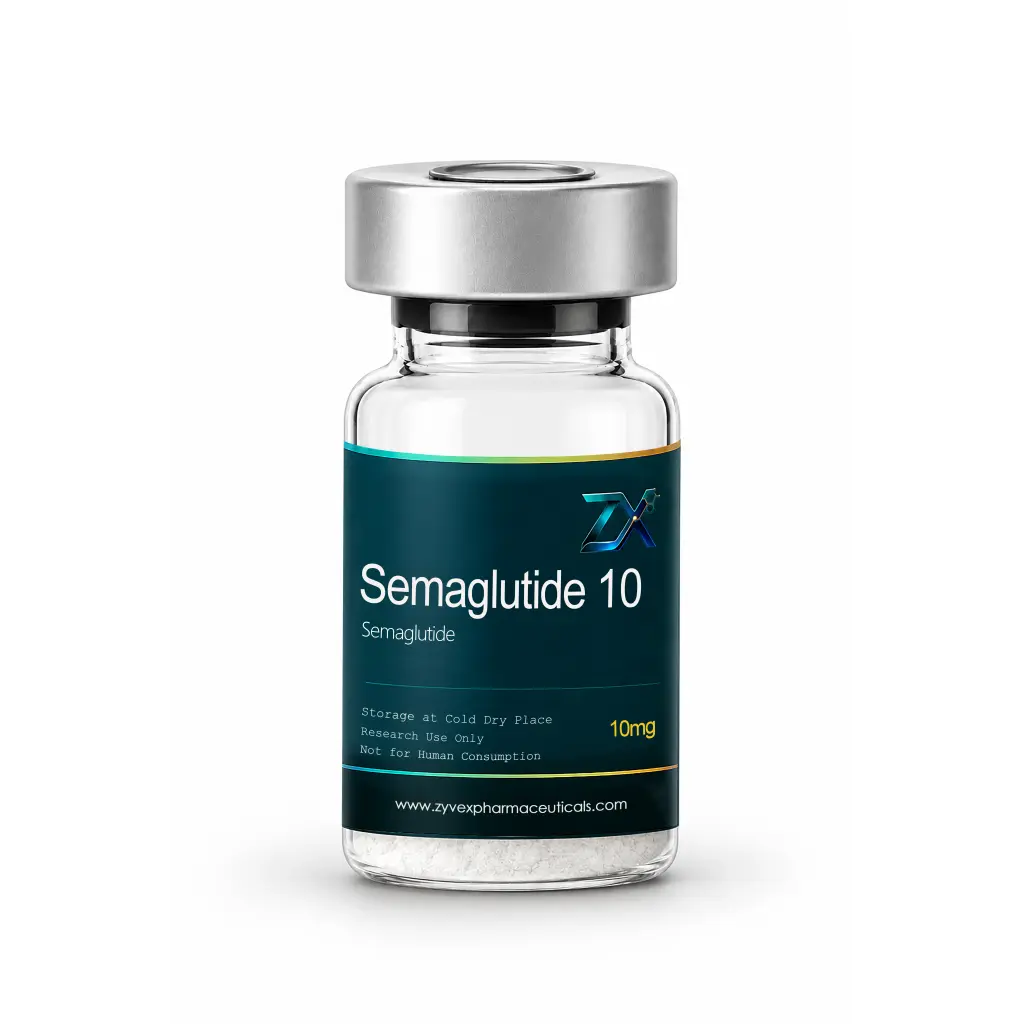
Buy Semaglutide 10 by Zyvex at XSteroids. This is a single 10 mg vial of lyophilised semaglutide, the GLP-1 receptor agonist peptide that pharmacies sell as Ozempic, Wegovy and Rybelsus. The page explains what a 10 mg research vial is, how the peptide signals through the GLP-1 receptor, how a researcher converts the powder into measured draws on an insulin barrel, and why a vial mixed at the bench is not the same product as an approved injection.
Start with what actually arrives. This is a 10 mg vial of lyophilised semaglutide, the GLP-1 receptor agonist peptide, supplied as a research product for laboratory work. At the bench the researcher reconstitutes the powder, sets the concentration and draws measured amounts, so the figures below describe how the molecule behaves rather than a treatment plan.
What arrives is one glass vial of freeze-dried white powder holding 10 mg of semaglutide, placed in the metabolic section of the Zyvex line beside Retatrutide 20. The molecule itself is a synthetic analog of human GLP-1 carrying a fatty acid side chain that ties the peptide to albumin in circulation, which slows clearance so that one administration lasts about a week.
Zyvex prints the strength in the product name, which is where the 10 in this card comes from: a 10 mg vial, one vial per pack. No filler list is declared, there is no published independent potency test for the vial, and no approved dose exists for it. The pack is the specification.
Binding the GLP-1 receptor sets off three effects that matter to a researcher: insulin release that depends on glucose being present, a slower rate of stomach emptying, and a lower total intake of food driven by appetite signals in the hypothalamus. Semaglutide is not a steroid, not a hormone and not a stimulant, and it does not touch the androgen axis.
The injected medicine clears slowly: its elimination half-life sits near one week, in the range of 165 to 184 hours, and traces stay detectable for weeks after the last dose. Albumin binding is what buys that duration. A vial reconstituted at the bench is a different preparation with no published human pharmacokinetics, so the figures from the licensed product serve as context and nothing more.
Expect the arithmetic to be the practical part of ownership. Ten milligrams is a generous mass relative to the amounts used in the trials, so the vial lasts a long time at research amounts and the constraint is solution stability, not supply: once mixed, the solution has weeks, not months.
Expect a gradual curve rather than a switch. In the trial data the average weight change accumulated across 68 weekly administrations, and the effect reversed after dosing stopped, with roughly two thirds of lost weight regained within a year in the extension study. A single 10 mg vial cannot reproduce a 68 week course and is not meant to.
One division settles every draw. The 10 mg of powder is shared across the volume of bacteriostatic water you add, and that quotient is the strength of each millilitre. A syringe ruled U-100 is marked in units of 0.01 ml, so the graduations map onto mass once the quotient is known. With 10 mg on the bench, the volume of water decides how easy the reading becomes.
At 10 mg plus 1 ml, the concentration is 10 mg/ml, so 0.25 mg is 0.025 ml and reads as 2.5 units, which is awkward to measure accurately. At 10 mg plus 2 ml, the concentration is 5 mg/ml, so 0.25 mg reads as 5 units, 0.5 mg as 10 units and 1 mg as 20 units. At 10 mg plus 4 ml, the concentration is 2.5 mg/ml, so 0.25 mg reads as 10 units and 1 mg as 40 units.
What the labels authorise is background reading rather than a schedule for this vial. Ozempic steps through 0.25 mg once weekly for the first month, doubles to 0.5 mg, then moves to 1 mg and allows up to 2 mg. Wegovy starts at 0.25 mg, moves to 0.5, passes through 1 and 1.7, and ends at 2.4 mg, with a minimum of four weeks spent at every step. Forty of the smallest 0.25 mg steps fit inside 10 mg, which is the arithmetic of a bulk research pack rather than of a treatment course.
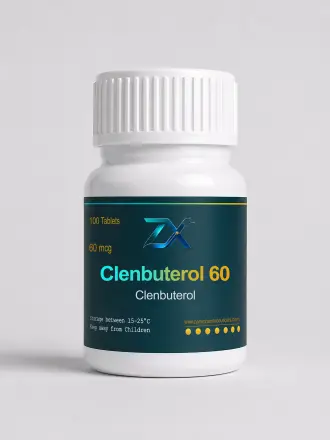
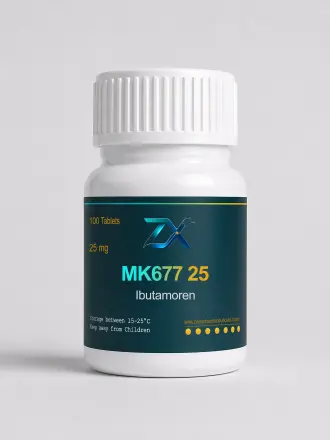
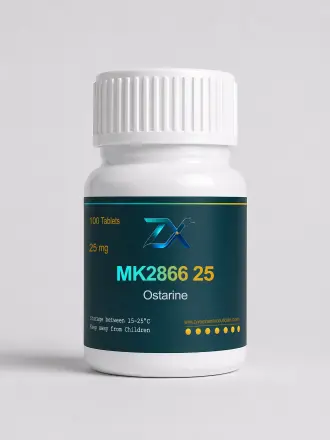
Nothing below is a recommended combination; it is the rest of the cutting shelf. The other incretin vial is Retatrutide 20. Classic thermogenic research uses Clenbuterol, while endurance and fat oxidation work often references Cardarine (GW-501516) and the SARM shelf holds Ostarine (MK 2866) plus Ibutamoren (MK 677).
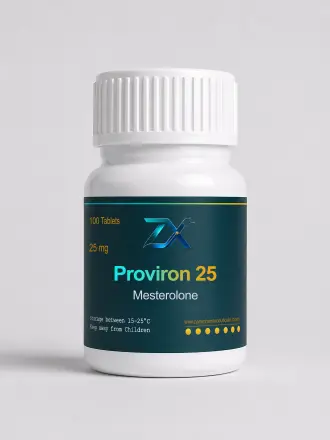
Support products in the same catalog are Proviron for on-cycle support and TB-500, the repair peptide. An incretin peptide does not require any of them, and the only genuine consideration is that appetite suppression changes how much food is eaten, which matters if muscle retention is the goal.
It comes back, mostly. In the extension of the STEP-1 trial, those who came off treatment put back roughly two thirds of what they had lost inside the next year, and part of the cardiometabolic gain reverted too. The appetite effect persists only while the peptide is present in circulation.
For a vial mixed at the bench there is no published withdrawal study, since every trial ran on a licensed injection whose delivered dose was measured. A researcher planning a block has only the trial withdrawal curve as the nearest analogue, and should assume that the mass on the scale will not hold.
The gastrointestinal profile dominates: nausea, vomiting, diarrhoea, constipation and stomach pain, dose-dependent and most frequent during the first two to three months of titration. Because gastric emptying slows, burping, dyspepsia and rarely gastroparesis are reported, and the label also warns about gallbladder disease and a resting heart rate increase of around three beats per minute.
Two safety points are non-negotiable. A boxed warning covers thyroid C-cell tumours seen in rodents, and the label bars use where the patient or a close relative has medullary thyroid carcinoma or the MEN-2 syndrome. Class warnings on acute pancreatitis, including necrotising and fatal cases, were strengthened in 2026. On sport, semaglutide is not prohibited and no therapeutic use exemption is required, but the GLP-1 class is monitored by WADA and that could change. This vial is a research product.
The sealed vial can sit either in a refrigerator at 2 to 8 C or in a dry, dark cupboard held at 15 to 25 C, and the powder must never be frozen. After the water is added the liquid belongs in the cold and has to be used up inside roughly a month, since repeated freezing and thawing degrade a peptide. Ten milligrams will outlast that window comfortably, so note the day you mix it.
This vial sits inside the Zyvex brand catalog at XSteroids, and the metabolic, SARM and support shelves of that brand all go into one order. Payment runs over an encrypted channel. Domestic US parcels usually arrive somewhere between three and six days, while international consignments take twelve to twenty-six days. The cards listed underneath show the usual companions.
It is a single receptor agonist, which is the clearest distinction. Semaglutide activates the GLP-1 receptor only, whereas tirzepatide also activates the GIP receptor and retatrutide adds the glucagon receptor. That is why comparison tables list semaglutide as the mono-agonist reference point for the class.
No. Ozempic, Wegovy and Rybelsus are branded pharmacy injections of the same molecule, supplied ready to use at a fixed strength. The Zyvex vial is a lyophilised research product: the researcher reconstitutes the powder and sets the concentration. The molecule matches, but the format, the strength and the handling differ, so the two are not interchangeable.
Forty steps of 0.25 mg, twenty of 0.5 mg, or ten of 1 mg. Mixed with 2 ml of bacteriostatic water, the concentration is 5 mg/ml, so 0.25 mg reads as 5 units on a U-100 syringe and 1 mg reads as 20 units. Only the arithmetic is fixed, not a schedule.
In STEP-1, 1961 adults without diabetes received 2.4 mg weekly for 68 weeks alongside lifestyle intervention, and mean weight change was minus 14.9 percent against minus 2.4 percent on placebo. That is a licensed injection trial, so the figure is context for a research vial rather than an expectation.
The weight returns. In the extension of STEP-1, people who discontinued regained about two thirds of the lost weight within a year, and part of the cardiometabolic benefit reversed. The approved half-life is about one week, so appetite suppression lasts only while the peptide remains in circulation. Nothing about that is permanent.
No. Semaglutide is not named on the WADA prohibited list and does not require a therapeutic use exemption. GLP-1 receptor agonists are included in the WADA monitoring programme, which means data are being collected on the class and the position could change in a future edition of the list.
You can buy the Zyvex Semaglutide 10 mg vial online at XSteroids, direct from the brand catalog. Add the vial to the cart on this page and check out securely. US domestic shipping takes 3 to 6 days and international delivery 12 to 26 days.
Loading...
Your cart is currently empty. Let us assist you in finding the right product