Quick View
Loading...

Generic Peptides
Estimated Delivery: 12-26 Days (International), 3-6 Days (United States)
Return within 45 Days of purchase. Duties & taxes are non-refundable.
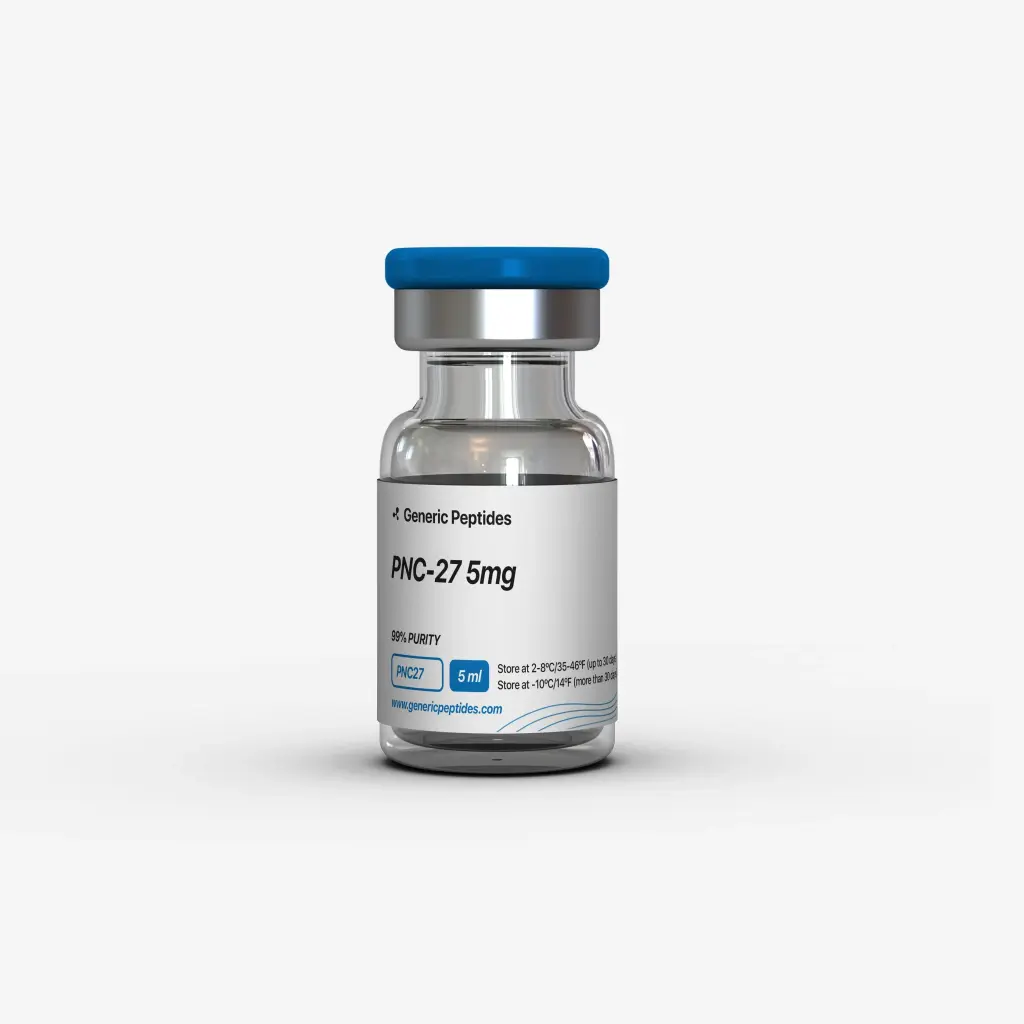
Buy PNC-27 5 mg by Generic Peptides at XSteroids. PNC-27 is an experimental peptide built from part of the p53 protein, studied in laboratories for the way it interacts with cancer cells. Generic Peptides supplies it as a single 5 mg lyophilized vial. This page explains what the molecule is, how it is reported to work in cell and animal studies, and why there is no human data and no approval of any kind.
This is important to state first: PNC-27 is a laboratory research peptide with no approved use, no human trials and no dosing data in people. The FDA has warned consumers not to buy or use it. Nothing on this page is a treatment claim or medical advice.
Your order ships as one glass vial of white lyophilized powder, filled at 5 mg. Mixing water is not supplied and has to be arranged separately, and the powder needs dissolving before any laboratory work. Generic Peptides prints the substance and the 5 mg figure on the label; no filler list is released and no independent potency test is published.
PNC-27 is a synthetic chimeric peptide of 32 residues. One part is the HDM-2 binding domain of the tumour suppressor protein p53, covering residues 12 to 26. The other part is a membrane-penetrating leader sequence derived from a peptide that helps larger molecules cross cell membranes. The two are joined into a single chain. The molecule is best described as a laboratory tool rather than a medicine.
What you are buying is that tool as a research reagent, intended strictly for in vitro and animal research. It is not a cancer treatment, and no part of the evidence base supports using it in a person.
HDM-2, also called MDM2, is the protein that normally keeps p53 in check. In published cell studies, PNC-27 takes a shape that binds HDM-2 and then targets that protein where it appears on the membranes of cancer cells. Binding is reported to open cytotoxic pores across the membrane and drive the cell into necrosis, a form of cell death that is different from orderly apoptosis. The proposed selectivity depends on the presence of HDM-2-containing complexes on the cancer cell surface.
In cultured cancer cell lines, PNC-27 was reported to lyse cancer cells while leaving normal cells largely unaffected, and a related peptide, PNC-28, was described in the same line of work. All of this comes from cell cultures and animal models. Cell culture results do not predict what a compound will do in a living human being, and the leap from a dish to a patient is exactly where most candidate molecules fail.
There are no published controlled studies in humans, no phase 1 to phase 3 trials, no established dose and no human safety record for PNC-27. The half-life in humans has never been characterised. That gap is the single most important fact about the compound.
Because only preclinical data exists, there is no human outcome to describe and no realistic timeline to give. The published work reports membrane pore formation and cell death in cancer cell cultures, and the same laboratory tools are used to study how peptides interact with membranes and with p53 signalling. That is where the evidence stops.
It is worth being direct about what this means. No study in people has measured safety, dose, benefit or duration for PNC-27, so any expectation of a therapeutic effect would be guesswork rather than a result. Claims that the peptide treats or cures cancer are not supported by human evidence, which is precisely why regulators have warned against products sold that way. Research use means laboratory study of a mechanism, not treatment of a person.
A 5 mg vial plus 1 ml of bacteriostatic water lands at 5 mg per ml: 1 mg then measures 0.2 ml, equal to 20 units on a U-100 insulin syringe, while 500 mcg measures 10 units. Doubling the water to 2 ml halves the concentration to 2.5 mg per ml and doubles every volume. Run the water down the wall, then rotate rather than shake.
Because no human study exists, there is no recommended or approved dose for PNC-27. Any quantity mentioned in a research paper refers to concentrations used in cell culture or to animal experiments, and those numbers cannot be carried over to a person. This page gives mixing arithmetic only, not a protocol.
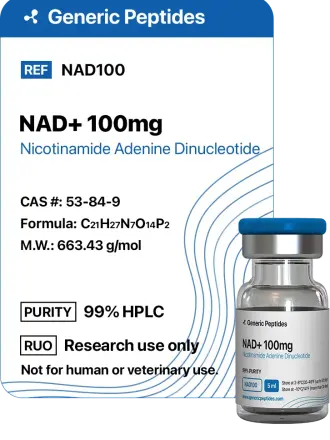
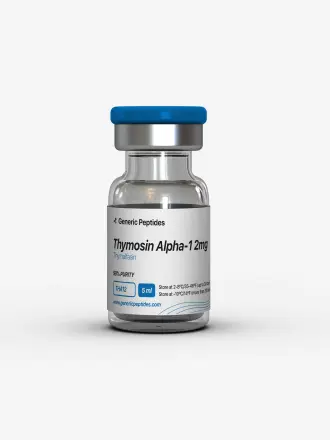
PNC-27 has no established combination data, and it is not part of any recognised protocol. In the same catalog, research peptides that are often read about together with it in an immune or cellular research context include Thymosin Alpha-1 2 mg and Thymalin 20 mg, which are studied for immune signalling, plus Glutathione 200 mg and NAD+ 100 mg for cellular metabolism. Structural repair research uses BPC-157 5 mg and TB 500 5 mg, and Epitalon 10 mg sits in the longevity line. None of these combinations has ever been tested with PNC-27.
There is no recovery protocol because there is no clinical use. The compound exists in the research literature only, and the appropriate context is a laboratory studying how peptides interact with cell membranes. People who search for PNC-27 are usually reading about the underlying science of p53 and HDM-2, not about anything that can be applied to a person. That distinction between laboratory findings and a usable treatment is the whole story of this molecule so far.
Because there is no human data, the side effect profile is unknown. There is no established safe dose, no toxicology in people and no long term data. The cell culture work does not provide any reassurance about human use, and the peptide should never be treated as though it did.
The FDA has warned consumers not to purchase or use PNC-27, which has been marketed online as a cure for cancer. In testing, the agency's laboratory found the bacterium Variovorax paradoxus in a sample of an inhalable PNC-27 solution, which is a contamination risk on top of the lack of approval. Products that make broad cancer cure claims without evidence are exactly what that warning targets.
PNC-27 is not a cancer treatment. Anyone dealing with a cancer diagnosis should be discussing approved options with a qualified clinician, not researching peptides. This page is educational background on a research molecule and nothing more.
Powder keeps at 2 to 8 C, and a freezer is the better place when storage stretches out. Mix only what is needed: the solution lives at 2 to 8 C for about four weeks and should not be frozen. With no label in existence for this vial, these are laboratory conventions for peptides and not manufacturer directions.
PNC-27 from Generic Peptides reaches you as one labelled 5 mg research vial matching the pack listing on this page, supplied strictly for laboratory research. Orders go through a secure checkout; allow 3 to 6 days inside the US and 12 to 26 days abroad. The status is stated without gloss: no human data, no approval and a public FDA warning sit alongside the product, so nothing about the order is a surprise.
It is a chimeric peptide of 32 residues. One segment is the HDM-2 binding domain of the p53 protein, covering residues 12 to 26. The other is a membrane-penetrating leader sequence. The two parts are joined into a single synthetic chain that researchers use as a laboratory tool.
In cell studies the peptide adopts a shape that binds HDM-2, also called MDM2, where it appears on the membranes of cancer cells. Binding is reported to open cytotoxic pores and trigger necrosis. In culture it lysed cancer cells while leaving normal cells largely unaffected. This is laboratory work only.
No. There are no published controlled studies in humans, no phase 1 to phase 3 trials, no established dose and no human safety record. The half-life in humans has never been characterised. All of the existing evidence comes from cell cultures and animal models, which do not predict human results.
No. PNC-27 is not approved anywhere for any condition. It is a preclinical research compound with no approved indication, no approved dose and no marketing authorisation. Claims that it treats or cures cancer are not supported by human evidence, which is why regulators have warned against it.
The FDA warned consumers not to buy or use PNC-27, which was being sold online as a cancer cure. Its laboratory found the bacterium Variovorax paradoxus in a sample of an inhalable PNC-27 solution, adding a contamination risk to the lack of approval. The warning targets unproven cure claims.
Add 1 ml of bacteriostatic water for 5 mg per ml, so 1 mg reads as 20 units on a U-100 syringe and 500 mcg as 10 units. With 2 ml the strength halves and the volumes double. Add water down the vial wall, swirl, never shake, and refrigerate the solution.
You can buy PNC-27 by Generic Peptides online at XSteroids, direct from the brand catalog. Choose the 5 mg research vial on this page, add it to the cart and complete the order with secure checkout. US domestic delivery takes 3 to 6 days and international shipping 12 to 26 days.
Loading...
Your cart is currently empty. Let us assist you in finding the right product