Quick View
Loading...

Generic Peptides
Estimated Delivery: 12-26 Days (International), 3-6 Days (United States)
Return within 45 Days of purchase. Duties & taxes are non-refundable.
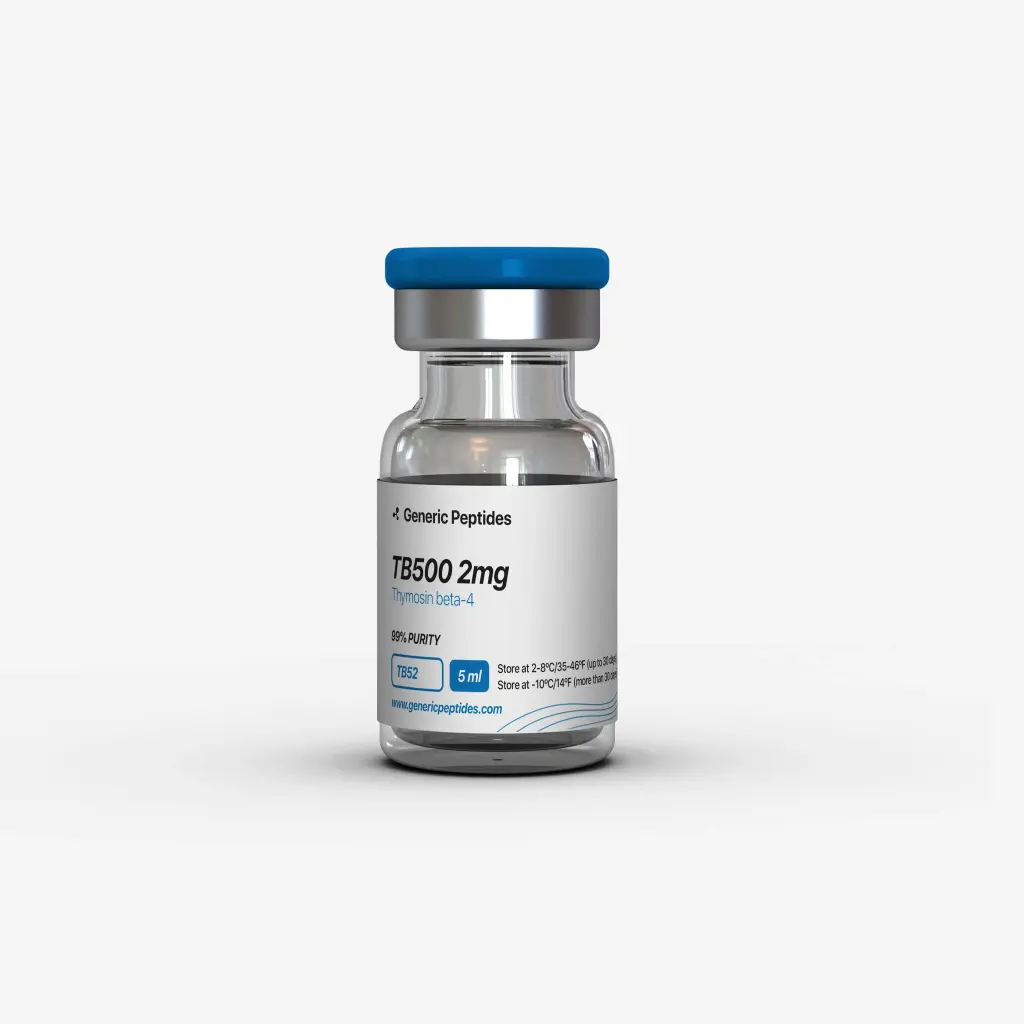
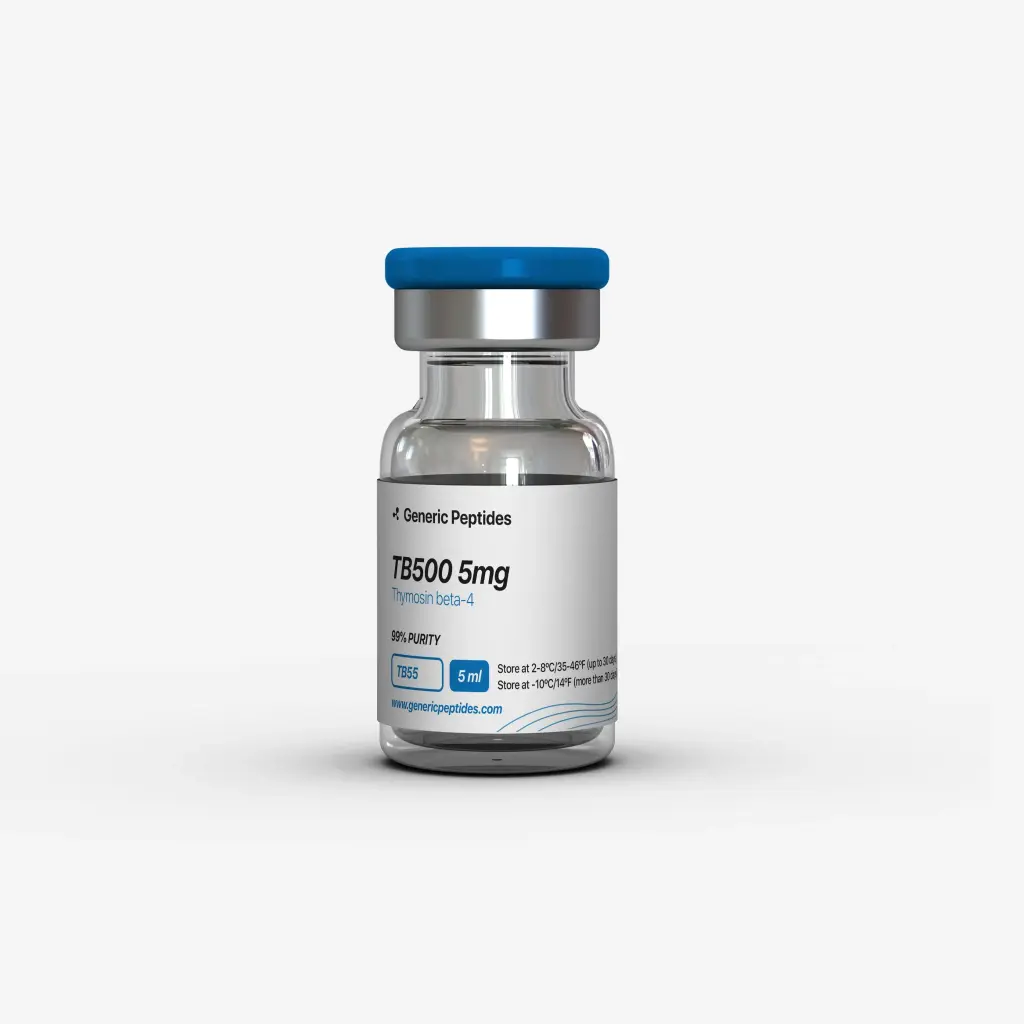
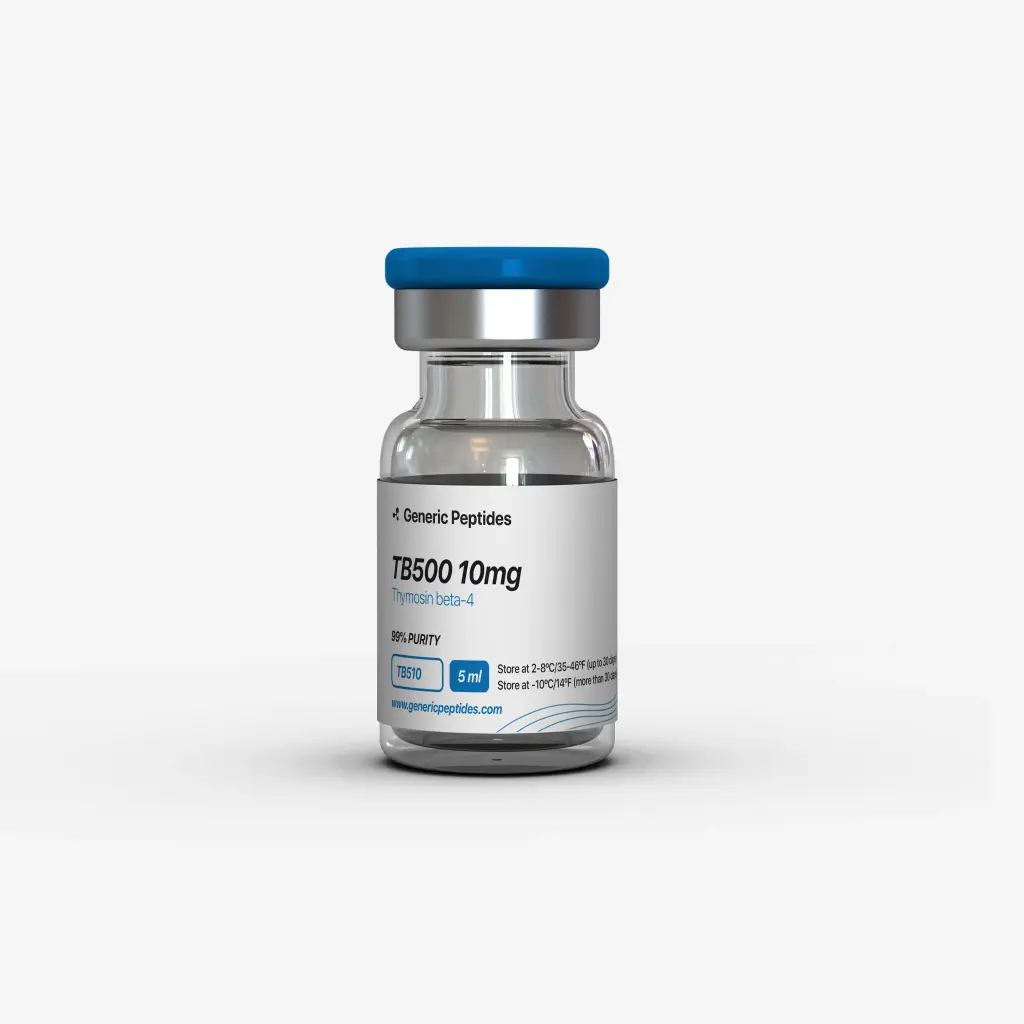
Buy TB 500 by Generic Peptides at XSteroids. TB 500 is a synthetic heptapeptide modelled on thymosin beta-4, the actin-binding protein present in almost every human cell, and Generic Peptides offers it as a lyophilized vial in three fills, 2 mg, 5 mg and 10 mg. Research interest in this fragment centres on its claimed whole-body action: supplier material describes the injection as travelling systemically rather than acting only where it is placed. This page covers what is physically in the vial, how the peptide interacts with actin, what has actually been observed and in which species, the mixing arithmetic for every vial size, research amounts, stacking, storage and legal status.
Two limits belong at the top. TB 500 itself has never been given to humans in a controlled study, and no human half-life has been established. Everything below comes from laboratory work, the parent protein's clinical record or supplier documentation, not from an approved product label.
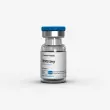
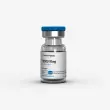
One glass vial of white lyophilized powder is what the order contains, filled at 2 mg, 5 mg or 10 mg and finished with a rubber stopper and crimp cap. Bacteriostatic water, sterile water, syringes and swabs are bought separately rather than supplied in the box. Three fills share a single listing, so the milligram figure is set on the pack option and stays out of the product name.
Chemically the peptide is the N-acetylated sequence Ac-LKKTETQ, a seven-amino-acid chain that reproduces residues 17 to 23 of the thymosin beta-4 protein. The parent protein is 43 amino acids long, so the fragment is about one sixth of its length. Its identifiers are CAS 885340-08-9 and PubChem 62707662. Vendor blurbs sometimes call TB 500 a 17-amino-acid fragment, while the peptide literature treats it as the acetylated heptapeptide; that is the description followed on this page.
Thymosin beta-4 grips G-actin through the LKKTET motif, and TB 500 copies exactly that segment. By occupying the same site the fragment takes part in actin polymerisation, the process that governs how cells change shape, move and migrate. Supplier descriptions build on that single interaction to list actin binding and cell motility, new blood vessel formation, a drop in pro-inflammatory cytokines, stronger collagen synthesis and faster keratinocyte migration.
The full protein also acts outside the cell in ways that actin binding does not explain, and this moonlighting behaviour is the source of the wider regeneration claims. The distinction matters to a buyer: evidence for those extracellular effects comes from work on the whole protein, not from the acetylated fragment in this vial.
No published human pharmacokinetics exist for TB 500, so peak levels, distribution and clearance are unknown. What survives is a route-related claim: the peptide is injected subcutaneously and is described as acting through the body rather than only at the injection site, which is the practical difference between it and BPC-157 in the same repair category.
The honest summary is that everything mechanistic about this fragment was observed in vitro or in animals. Cell studies show the expected actin interaction, while the angiogenesis, cytokine and collagen observations come from animal work. There is no controlled human injection study to quote and no human marker that has been measured after dosing.
The parent protein holds one narrow slice of human data that is often borrowed unfairly: a thymosin beta-4 eye-drop programme in neurotrophic keratopathy reported complete healing in 6 of 10 treated eyes against 1 of 8 on placebo in one Phase III, while a second European Phase III missed its primary endpoint. That was a topical formulation of the whole protein, not the injected fragment.
Supplier material describes a first one to two weeks in which less pain and inflammation are reported, with tissue changes said to appear over three to six weeks. Treat that timeline as a vendor expectation rather than a measurement, because nobody has published the study that would confirm it.
The volume of water is the only variable you control. Add 2 ml to the 2 mg vial and the strength is 1 mg/ml, giving 100 mcg at the 10-unit line of a U-100 syringe; use 1 ml and that line holds 200 mcg instead. The 5 mg vial lands at 2.5 mg/ml with 2 ml, which is 250 mcg per 10 units, or 500 mcg per 10 units when 1 ml is used. The 10 mg vial runs 5 mg/ml with 2 ml, so 10 units give 500 mcg, and 3 ml gives 3.33 mg/ml with roughly 333 mcg per 10 units. Swirl the vial; do not shake it.
Vendor write-ups set out a four-week loading phase at 2.0 to 2.5 mg given twice weekly, which comes to 4 to 5 mg each week, then move to maintenance at 2.0 to 2.5 mg once weekly. A cycle of six to eight weeks is followed by a break of similar length. On that arithmetic the 2 mg vial is spent in most of one loading week, the 5 mg vial covers one loading week or two to three maintenance weeks, and the 10 mg vial lasts about two loading weeks.
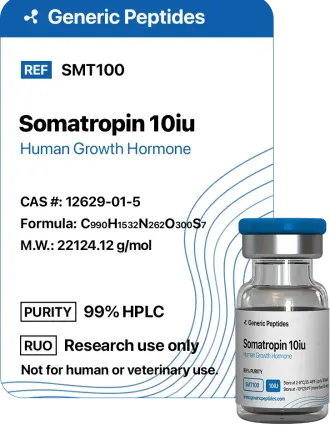
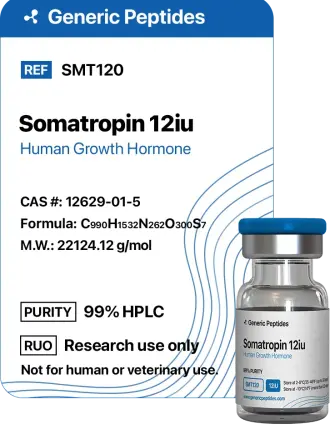
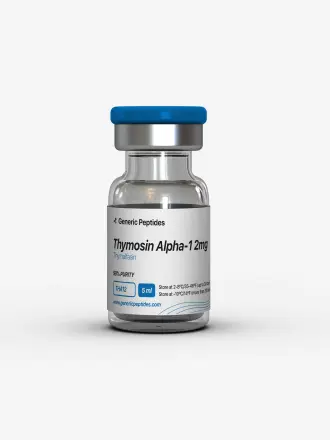
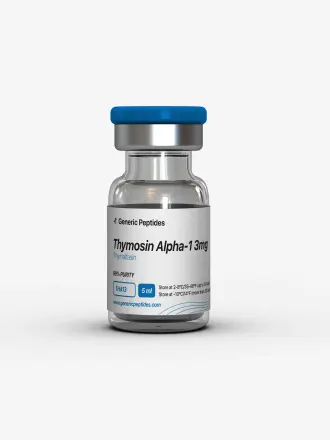
The usual partner is BPC-157, described as acting where it is injected while TB 500 is described as acting through the whole body. Growth hormone takes part in connective tissue turnover, so Somatropin and HGH Frag 176-191 appear in the same plans, and Tesamorelin is the closest lipolytic neighbour. For immune-side research the natural companions are Thymosin Alpha-1 and Thymalin.
TB 500 is a peptide rather than a hormone, so it leaves testosterone production alone and brings no post-cycle therapy requirement of its own. If it sits inside a larger stack, recovery concerns whatever else is running: a GH-releasing peptide needs its own break, while Epitalon or NAD+ in a longevity protocol follow their own schedules.
No human safety file exists for the fragment. The thymosin beta-4 eye-drop programme reported no serious adverse events during its Phase III work. Any subcutaneous peptide can leave redness or tenderness where it is placed. The reference literature links raised thymosin beta-4 with tumour development, which is the heaviest caution on this page and the reason a current or past cancer diagnosis is treated as an exclusion.
Class S2 of the WADA Prohibited List names thymosin beta-4 and its derivatives, TB-500 appearing there as the worked example, and that class applies continuously. No regulator has approved TB 500 as a medicine; it is sold as a research product.
The powder should sit between 2 and 8 C, out of the light, with a freezer reserved for storage that runs into months. A made-up solution stays at 2 to 8 C and is used within 28 to 30 days; freezing it is not an option and long spells at room temperature should be avoided. Let the vial warm up before a draw and wipe the stopper.
All three TB 500 fills, 2 mg, 5 mg and 10 mg, are listed at XSteroids in the Generic Peptides category, which means a stack can be assembled in one order. Compare the BPC-157 card when local repair matters more than a systemic claim, and read Somatropin or HGH Frag 176-191 when connective tissue and growth hormone are the subject.
It is described as systemic, meaning the injection does not need to reach an injury site. The fragment circulates and acts through actin binding and cell migration, so a standard subcutaneous site such as the abdomen or thigh is used just as readily as any other.
No. Neither the fragment nor the parent protein has a published human elimination profile, and supplier documentation states that the human half-life is not established. Injection intervals in research protocols therefore reflect convention and convenience rather than measured kinetics, which is worth remembering before treating any schedule as precise.
Add bacteriostatic water and swirl gently instead of shaking. A 5 mg vial with 2 ml gives 2.5 mg/ml, so 0.1 ml contains 250 mcg and reads as 10 units on a U-100 syringe. A 2 mg vial with 1 ml gives 1 mg/ml, where 10 units hold 100 mcg.
Supplier protocols describe a loading phase of 2.0 to 2.5 mg twice weekly for four weeks, roughly 4 to 5 mg per week, then maintenance of 2.0 to 2.5 mg once weekly. Cycles last six to eight weeks, followed by a break of similar length.
It is a fragment, not the whole molecule. Thymosin beta-4 is a 43-amino-acid protein, while TB 500 is the acetylated heptapeptide Ac-LKKTETQ, covering residues 17 to 23. The fragment copies the actin-binding motif of the parent protein and is roughly a sixth of its size.
Yes. The Prohibited List names thymosin beta-4 and its derivatives, TB 500 among them, in class S2, and the ban applies at all times. There is no in-competition window and no practical therapeutic use exemption, because the peptide has no approved medical indication anywhere.
You can buy TB 500 by Generic Peptides online at XSteroids, direct from the brand catalog. Choose the 2 mg, 5 mg or 10 mg vial on this page, add it to the cart and complete the order with secure checkout, US domestic shipping in 3 to 6 days and international delivery in 12 to 26 days.
Loading...
Your cart is currently empty. Let us assist you in finding the right product