Quick View
Loading...

British Dragon
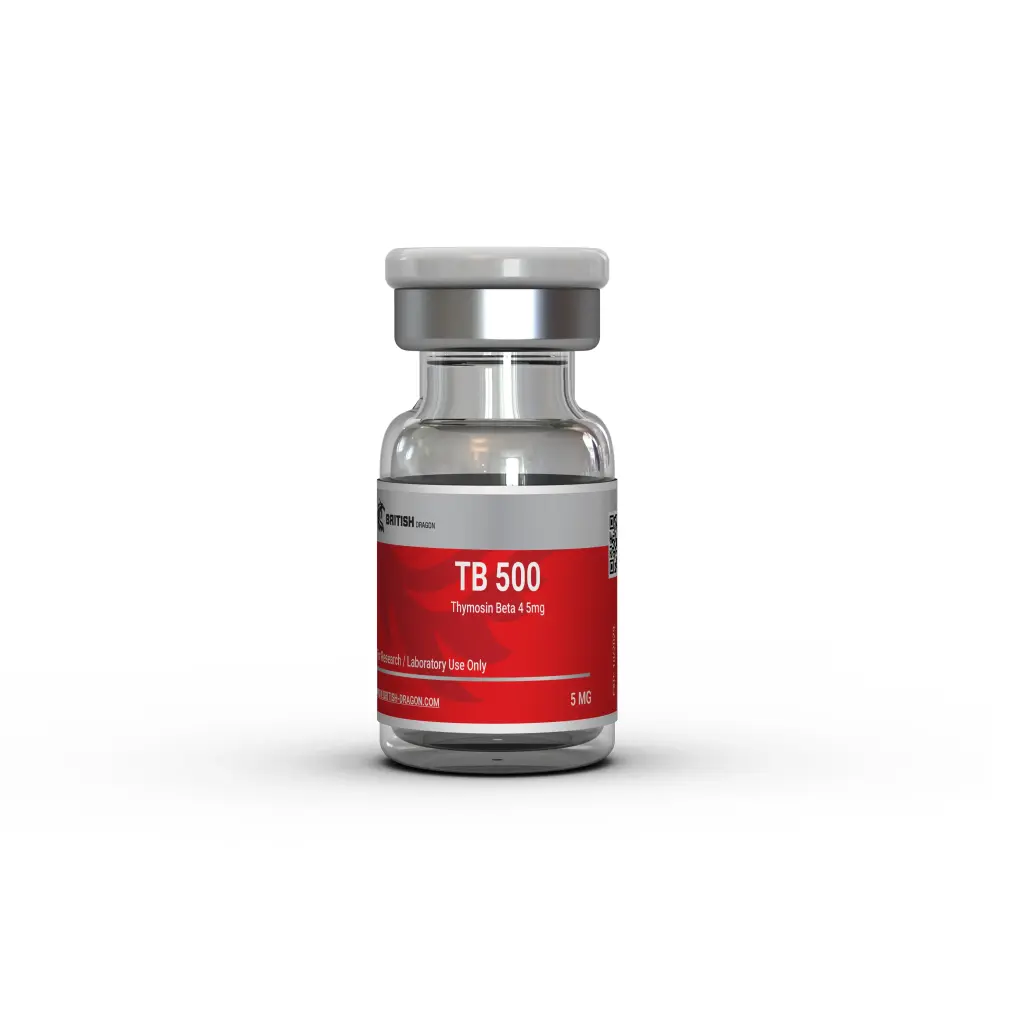
Buy TB 500 5 mg vials by British Dragon at XSteroids. TB 500 is the synthetic fragment of thymosin beta-4 that research uses for tissue repair and recovery, supplied by British Dragon as a lyophilized 5 mg vial that is dissolved before use. This page covers what it is, what the fragment does and does not have behind it, how a 5 mg vial calculates and how the brand protocol is laid out.
TB 500 has not been through human trials and is not approved anywhere; sold here it is a research product and the notes below are educational.
TB 500 is Ac-LKKTETQ: a synthetic, N-acetylated seven-amino-acid peptide, a heptapeptide, matching amino acids 17 to 23 of thymosin beta-4. That parent protein is 43 amino acids long, has a molecular mass of 4921 g/mol and binds actin, and the LKKTET motif in the middle is the actin-binding site. The peptide's role there is cell movement; the vendor's description adds angiogenesis, lower pro-inflammatory cytokines, more collagen synthesis and keratinocyte migration.
The distinction matters and most listings blur it. TB 500 is the fragment, and no clinical study has ever been run on the fragment in humans. The human data that exists belongs to the parent protein, thymosin beta-4, tested as an eye drop in neurotrophic keratopathy: one phase III trial reported complete healing in 6 of 10 treated eyes against 1 of 8 on placebo, with significant healing at p = 0.0359 and no serious side effects, while a European phase III of the same eye drop missed its primary endpoint.
Nothing in that paragraph is evidence about an injected research peptide, and a product page that implies otherwise is selling a story. The honest reading is: the protein shows something in a completely different form, and the fragment shows nothing in humans.
Reconstitute with bacteriostatic water and the numbers follow the water volume. At 2 ml the vial is 2.5 mg per ml, or 2500 mcg per ml, and 0.1 ml is 250 mcg; on a U-100 syringe that 0.1 ml is 10 units. At 1 ml the vial holds 5 mg per ml and 0.1 ml draws 500 mcg. A 2 mg dose at 2.5 mg per ml is 0.8 ml.
The vendor lays out two phases. Weeks 1 to 4 are the loading phase at 2.0 to 2.5 mg twice a week, so 4.0 to 5.0 mg weekly, which is where the line about one vial per loading week comes from. From week 5 the maintenance phase runs 2.0 to 2.5 mg once a week. The vendor also gives the timeline: less pain and inflammation in the first 1 to 2 weeks, more meaningful tissue recovery over 3 to 6 weeks. None of that is clinical guidance for the fragment.
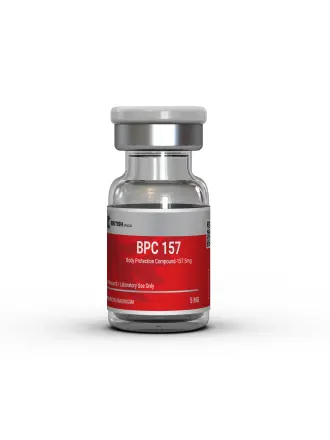
These are the two peptides people compare first. TB 500 acts systemically - the injection does not have to go into the injury, any standard subcutaneous site will do, because the effect is described across the body. BPC 157 is more often framed as the local agent. There is no head-to-head human study of the two.
Before reconstitution keep the powder at 15 to 25 C, or at 2 to 8 C for longer storage, and do not freeze it. After mixing, hold the solution at 2 to 8 C and use it within 30 days, avoiding repeated freeze-thaw cycles. Reconstitute with bacteriostatic water and discard any solution that turns cloudy.
For the fragment there is no human safety data at all, so nothing can be promised. The reference entry links high levels of TB 500 to tumour development without quantifying it. In sport the position is clear: the 2026 WADA list names thymosin beta-4 and its derivatives, TB 500 included, under class S2, prohibited at all times. In Australia and New Zealand it is a prescription medicine, and it is best known as a racehorse doping agent.
Worth knowing when reading any certificate of analysis: the brand's own page declares 5 mg per vial while its FAQ states the report shows 6.15 mg. Overfill like that is normal in peptide manufacturing, and it is a good reason to read the actual report rather than the label.
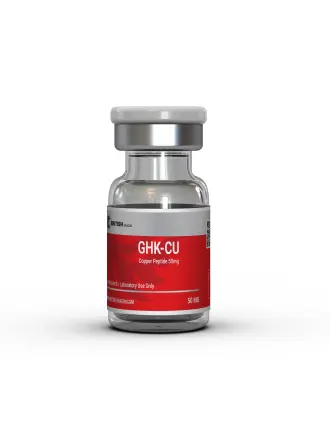
For skin and connective tissue the same brand has GHK-Cu 50 mg; for growth hormone release there are Ipamorelin and Sermorelin; and for metabolic work there is MOTS-c. All of them are lyophilized vials with their own reconstitution arithmetic.
British Dragon TB 500 ships from the brand catalogue with secure checkout, US domestic delivery in 3 to 6 days and international delivery in 12 to 26 days. The whole range is on the British Dragon page if you want to build a research set around this vial.
No. TB 500 is Ac-LKKTETQ, a seven-amino-acid fragment matching residues 17 to 23 of thymosin beta-4, which is a 43-amino-acid protein. The fragment is what is sold and injected; the protein is what was tested in human eye-drop trials. They are related, not the same molecule.
No clinical study has been run on the TB 500 fragment itself. The human evidence belongs to the parent protein thymosin beta-4, tested as an eye drop for neurotrophic keratopathy, where one phase III reported complete healing in 6 of 10 treated eyes versus 1 of 8 on placebo.
Yes, and permanently. The 2026 prohibited list names thymosin beta-4 and its derivatives, TB 500 included, under class S2 for peptide hormones and growth factors. There is no therapeutic use route for a research peptide, so anyone competing should treat it as off limits.
It is not established. The reference entry for TB 500 leaves the field empty, and the brand's own product page states the same: human half-life not established. That is unusual even among research peptides, and it means the dosing intervals in vendor protocols are conventions rather than kinetics.
By the vendor protocol: 2.0 to 2.5 mg twice a week for the first 4 weeks, then 2.0 to 2.5 mg once a week, over a 6 to 8 week cycle. One 5 mg vial covers roughly one loading week or two to two and a half maintenance weeks.
No, and that is the point of it. TB 500 is described as acting systemically, so the injection goes into a standard subcutaneous site such as the abdomen or thigh and does not need to reach the injury. BPC 157 is the peptide usually associated with a local approach.
You can buy TB 500 5 mg vials by British Dragon online at XSteroids. The store offers secure checkout, US domestic shipping in 3 to 6 days and international delivery in 12 to 26 days. Add the vial to your cart on this page to order.
Loading...
Your cart is currently empty. Let us assist you in finding the right product