Quick View
Loading...

Xeno Laboratories
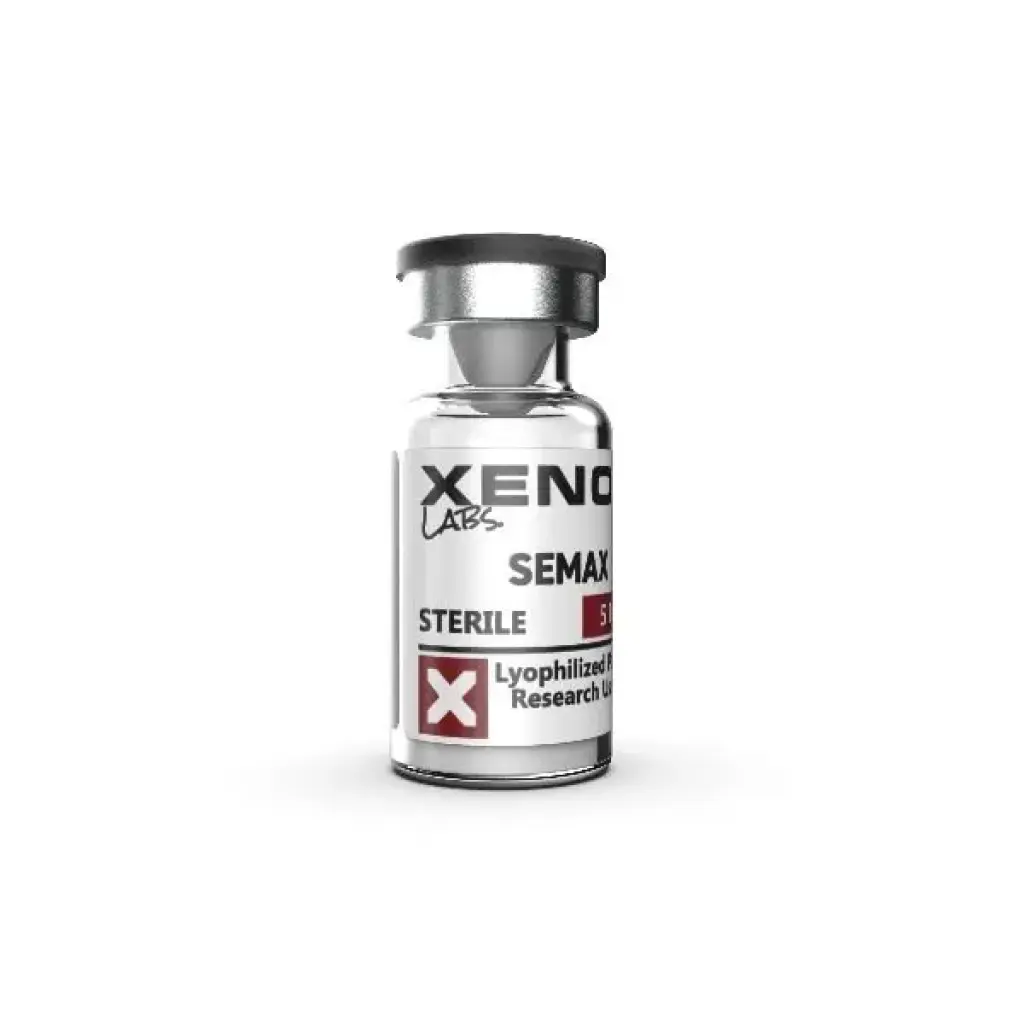
Buy Semax by Xeno Labs at XSteroids. The name Semax belongs to a seven amino acid peptide that Russian researchers built from the ACTH 4-10 fragment, and Xeno Labs offers it as a lyophilised powder packed in one vial. The sections below describe the vial's contents, the receptor and BDNF findings, the arithmetic of mixing and reading a U-100 syringe, and the precise position on licensing and testing.
The word itself is a Russian abbreviation that spells out seven amino acids. In Russia Semax has held a medicine licence since 1994; beyond that region the realistic form is a research vial. Nothing written here is medical advice, and the amounts quoted belong to research rather than to a person.
You receive one glass vial of lyophilised Semax. Chemically it is a heptapeptide, sequence Met-Glu-His-Phe-Pro-Gly-Pro, formula C37H51N9O10S, mass about 813.93 g/mol, CAS number 80714-61-0 and PubChem identifier 122178. It is a synthetic analog of the ACTH 4-10 fragment, extended and stabilised so that it survives longer than the natural fragment.
Poor oral bioavailability explains why the literature works with intranasal and subcutaneous routes rather than tablets. The Xeno Labs label carries the peptide name and its strength; no filler breakdown accompanies the pack, no laboratory result for this particular vial appears in print, and the item is catalogued as a research product.
The mechanism is not fully settled. The main hypothesis is interaction with melanocortin receptors MC4 and MC5, as either an antagonist or a partial agonist, plus inhibition of the enzymes that degrade enkephalins and other regulatory peptides, which is a property it shares with its cousin Selank.
In animals the measurable events are fast: BDNF and its receptor TrkB rise in the hippocampus, and both serotonin and dopamine systems are activated. Behavioural work reports antidepressant-like and anxiolytic-like effects and protection against chronic stress, which is the pharmacology that attracts most buyers to the compound. Human pharmacokinetics have never been established, so no half-life figure can be quoted.
Expect animal-grade evidence with one human outpost. The clearest clinical result is a Russian study in ischaemic stroke, where functional and motor recovery improved; that study is also the reason the peptide appears in a medical setting at all. Everything else rests on rodent work.
Expect the cognitive claim to be described mechanistically rather than demonstrated clinically. Buyers researching focus or recovery after neurological insult will find BDNF and TrkB data and one stroke trial, not a body of randomised Western evidence. That gap is the honest summary of this compound.
Preparing the powder is the usual arithmetic for any lyophilised peptide. Take the mass printed on the vial, divide it by however many millilitres of bacteriostatic water you introduce, and that quotient is your concentration; on a U-100 barrel each single unit equals one hundredth of a millilitre. For intranasal research the diluted solution is drawn as it stands, with no further step.
Start with a 2 mg vial: 2 ml of water produces 1 mg per ml, and a tenth of a millilitre therefore holds 100 mcg, shown at the 10 unit mark. A 5 mg vial given the same 2 ml now runs at 2.5 mg per ml, so that tenth carries 250 mcg, still read at 10 units. Give the identical 5 mg vial 5 ml instead and the strength returns to 1 mg per ml, putting 100 mcg back at 10 units. Use the figure your own Xeno pack states.
Russian clinical writing sets out an intranasal diluted solution taken several times daily across roughly a fortnight. Figures quoted by suppliers climb from 250 up to 1000 mcg for each dose, one to three doses a day, which reaches a daily total somewhere between 500 and 3000 mcg. Treat all of that as research convention rather than a label schedule for this vial.
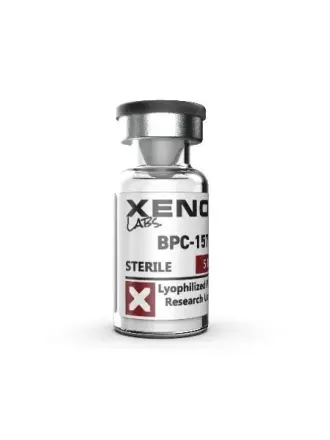
The obvious neighbour is Selank, which comes from the same institute and shares the enkephalin-degradation mechanism, so the pair is studied together more often than either is studied alone. Repair work is covered by BPC-157 and the longevity shelf by Epitalon.
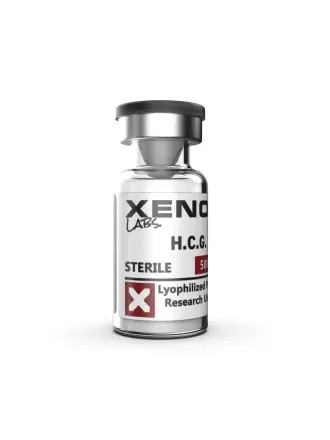
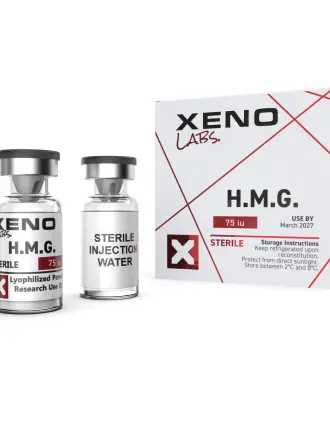
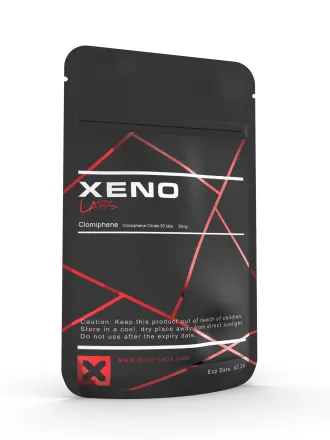
On the metabolic side the same catalog lists Semaglutide and Tirzepatide. If a plan needs hormonal support, the entries that cover it are the HCG 5000 IU vial, the HMG 75IU vial, and the Tamox and Clomiphene SERM pair. None of this is a dosing suggestion.
With no human half-life established, no washout figure can be quoted with confidence. The Russian clinical convention is a two week course, which is a sensible research shape: a fixed block, a log of amounts and timing, then a break before repeating. Because the peptide is not suppressive, there is no rebound to manage and no reason to taper the end of a block: stop at the end of the planned window and note the date.
Semax leaves hormonal pathways alone and does not lower testosterone, so no post-cycle requirement attaches to it. Where a research block runs alongside a steroid cycle, recovery planning stays a matter for the steroids, and the SERM, HCG and HMG cards elsewhere in this catalog are the entries written for it.
Reported clinical experience is mild, which is unsurprising for a peptide that has been used in Russian practice since the 1990s, but the published safety data are small and drawn from a single region. Long term use has not been formally characterised, so the published picture is thinner than for a modern drug.
Status, precisely: the Russian Ministry of Health licensed it in 1994, it sits on Russia's vital medicines list, and it is used there for stroke, transient ischaemic attack, encephalopathy, optic nerve atrophy, cognitive impairment and further indications. For anti-doping, the WADA prohibited list does not name Semax, and that reflects missing data rather than a formal clearance. Research product only.
While still dry, the powder may be refrigerated at 2 to 8 C or kept steady between 15 and 25 C, so long as it stays dark; the freezer is not an option. Once water has been added the vial moves to the fridge and its contents are best used within a month, with 28 to 30 days as the hard limit; repeated freeze and thaw cycles each cost a little peptide. Write the mixing date on the label. Sunlight and a warm forgotten shelf are the two quiet ways a dissolved peptide loses strength, so keep it cold and covered.
Semax forms one page of the Xeno Labs brand catalog at XSteroids, and the full peptide shelf, repair through longevity to metabolic, can be gathered into a single order. Payment is handled over an encrypted checkout; a parcel inside the United States normally arrives in three to six days, while an international order takes twelve to twenty-six. Cards below list the usual companions.
Semax is a synthetic heptapeptide, sequence Met-Glu-His-Phe-Pro-Gly-Pro, mass about 813.93 g/mol, CAS 80714-61-0. It is derived from the ACTH 4-10 fragment, extended and stabilised, and its name is a Russian abbreviation meaning seven amino acids. This Xeno Labs vial holds the lyophilised peptide.
In Russia, since 1994, where it is listed among vital medicines and used for ischaemic stroke, transient ischaemic attack, encephalopathy, optic nerve atrophy, cognitive impairment, peptic ulcer and immune support. It is not licensed by the FDA or the EMA, so elsewhere the practical form is a research vial like this one.
Animal work shows rapid rises in BDNF and its receptor TrkB in the hippocampus after administration, alongside activation of serotonin and dopamine systems and antidepressant-like effects in rodent models. That is preclinical data. In humans the clearest published result is improved functional and motor recovery in a Russian ischaemic stroke study.
The milligrams in the vial divided by the millilitres of bacteriostatic water gives the concentration. A 2 mg vial with 2 ml is 1 mg/ml, so 0.1 ml is 100 mcg and reads as 10 units on a U-100 syringe, where one unit equals 0.01 ml. Use your pack strength.
Russian clinical protocols use an intranasal diluted solution several times a day for roughly two weeks. Vendor research figures range from 250 to 1000 mcg per dose, one to three times daily, giving 500 to 3000 mcg a day. Human pharmacokinetics are not established, so none of this is a label schedule.
No named entry exists. Semax does not appear on the WADA prohibited list, but that reflects a lack of data rather than a positive ruling, and the list is reissued annually. Treat the status as unclassified if you compete, rather than reading silence as permission. This vial is a research product.
You can buy the Semax vial by Xeno Labs online at XSteroids, direct from the brand catalog. Add the vial to the cart on this page and check out securely. US domestic shipping takes 3 to 6 days and international delivery 12 to 26 days.
Loading...
Your cart is currently empty. Let us assist you in finding the right product